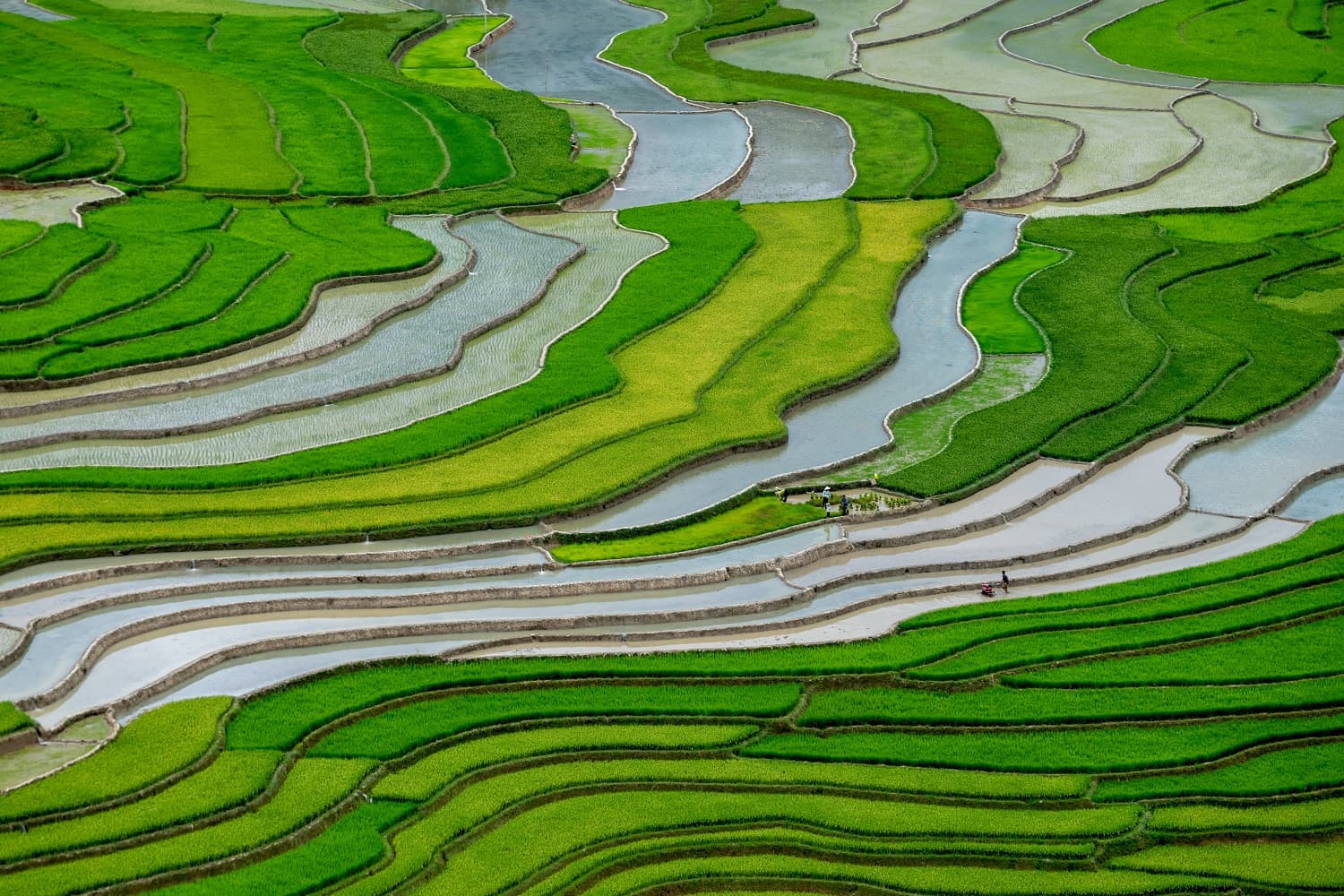
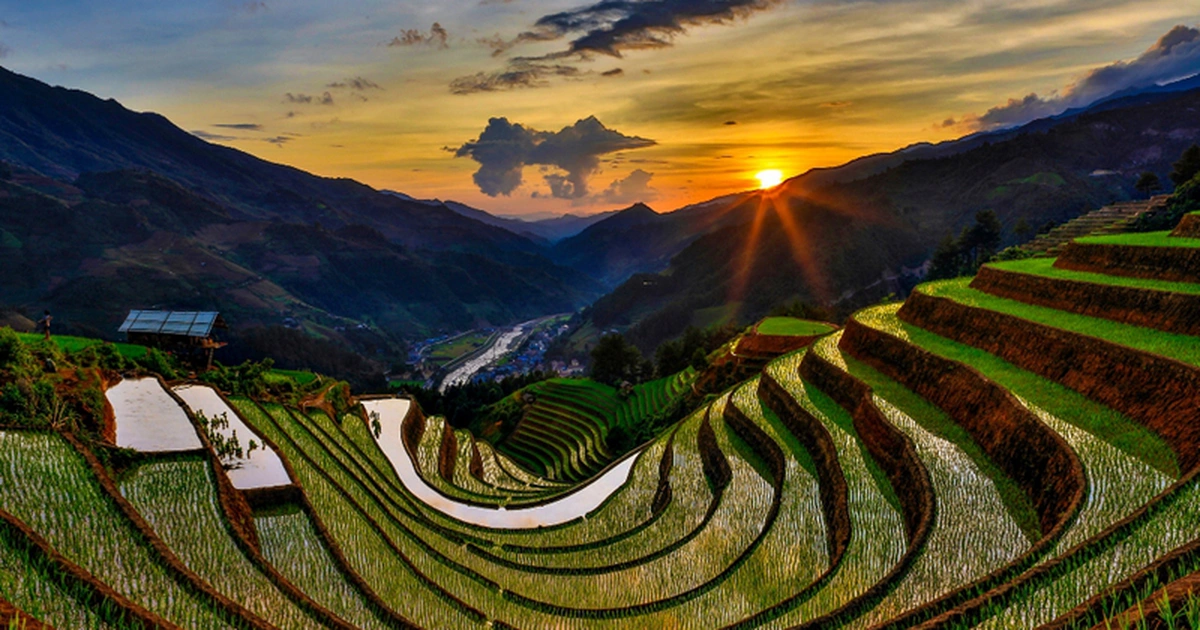
When people picture Mu Cang Chai's terraced rice fields in Yên Bái province, they usually imagine the golden waves of September and October made famous across social media. But there's another season, quieter and just as striking: July, when the terraces have just been flooded and freshly planted, and a tender green covers the mountainsides like a sheet of emerald.
Why July stands apart
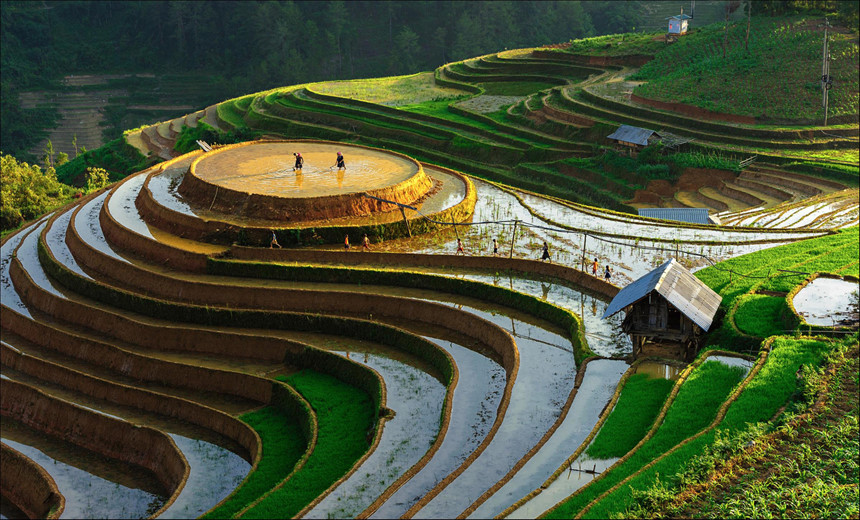
At this time of year, farmers finish channeling water from mountain springs into every terrace level, creating mirror-like pools that reflect the sky before the rice takes hold. A few weeks later, vivid green blankets the hills around La Pán Tẩn, Chế Cu Nha, and Zế Xu Phình — the three most photogenic communes in the area. The soft morning light, before the day's heat sets in, brings out every curve of the terraces.
It's also a far quieter time than the golden season: you'll mostly encounter H'mông families working the fields, rather than crowds of autumn photographers.
Getting to Mu Cang Chai
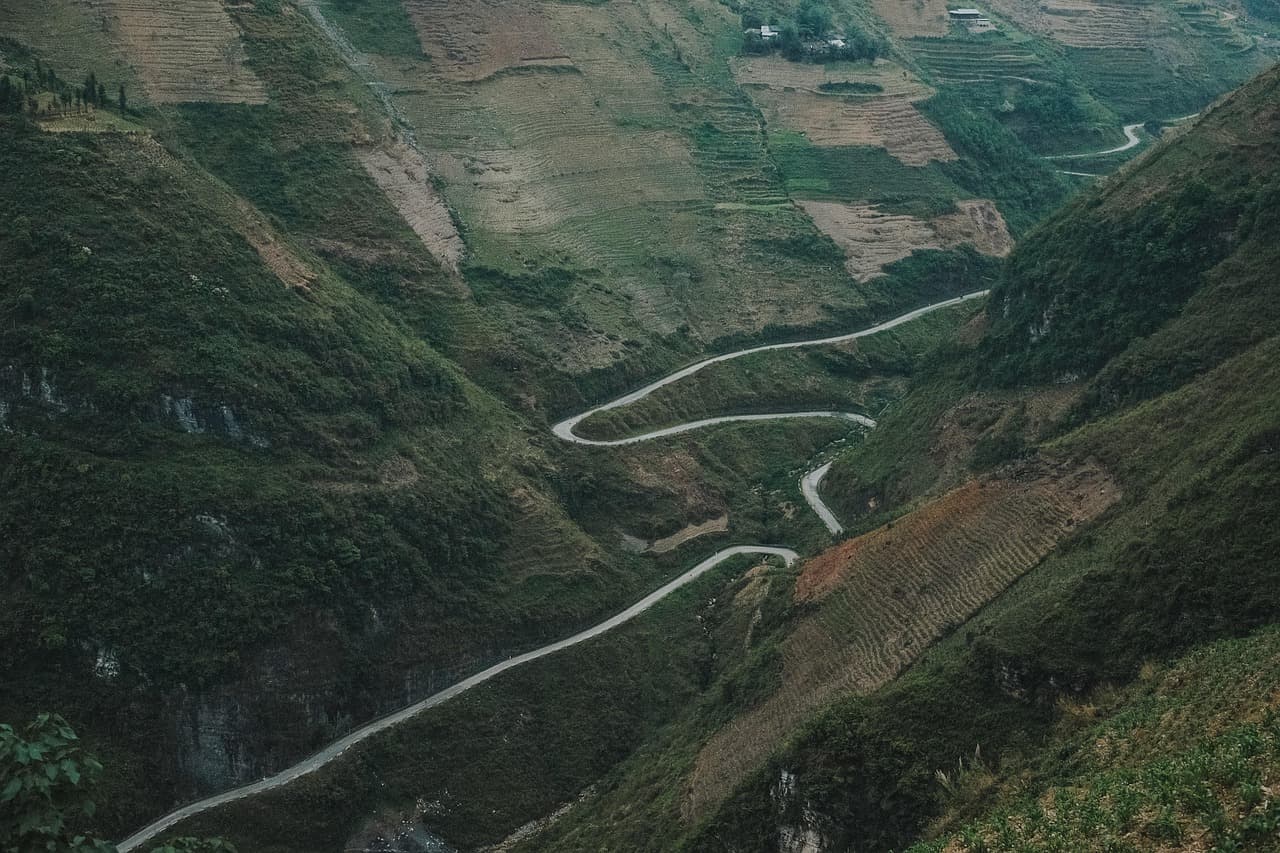
From Hanoi, plan for around 7 to 8 hours on the road (300 km), passing through Khau Phạ Pass, one of Vietnam's most scenic mountain passes. The drive is winding but spectacular, with possible stops in Nghĩa Lộ or Tú Lệ, known for its sticky rice. Many travelers combine Mu Cang Chai with Sa Pa to complete a full northwest loop.
Where to stay and what to do
Family-run homestays hosted by H'mông or Thái families offer the most authentic experience, often with direct views over the terraces. Plan for at least two nights to hike toward the viewpoints in La Pán Tẩn and the summit of Khau Phạ Pass, and to share a meal with your hosts.
Practical tips
Bring sturdy walking shoes — July still falls within the north's monsoon season, and late-afternoon showers are common, though they cool the air and deepen the colors. Pack a light rain jacket and check mountain road conditions before setting off, especially after heavy rain.
At VietNomads, we can build a custom itinerary featuring Mu Cang Chai's green season, complete with a private driver, hand-picked homestays, and a local H'mông guide for an immersive, off-the-beaten-path experience.