Introduction
Preparing a trip to Vietnam isn't just about booking a flight and a hotel. It's about understanding a country that stretches over 1,600km, contrasted and full of life — a country that can feel incredibly smooth... or exhausting, depending on how you approach it.
At VietNomads, we support travelers year-round. Some arrive extremely organized, others far less so. And what we consistently notice is that a minimum of preparation completely transforms the experience — not to control everything, but to travel more calmly, avoid the classic mistakes, and actually enjoy it.
This guide covers, in order, everything you need to sort out before leaving: entry requirements, timing, budget, money, transport, health, packing and safety. Read it start to finish, or jump straight to the section you need using the table of contents.
Visa and entry requirements
This is usually the first question, and the rules have changed several times in recent years. Travelers from many Western countries — including France — benefit from a visa exemption for tourism or short business trips of up to 45 consecutive days. No special procedure is needed in that case, just a valid passport.
If your trip runs longer than 45 days, or if you plan multiple entries into the country (for example a side trip to Cambodia or Laos), you'll need an e-visa: expect around 25 USD for a single entry and 50 USD for multiple entries, valid for up to 90 days. Apply only through the official portal, evisa.gov.vn, with processing taking 3 to 7 business days — avoid third-party sites that charge steep service fees for the same document.
"💬 VietNomads field tip
These rules change regularly: always check the latest version on the official portal before booking, rather than trusting a months-old article or forum post. Also carry a paper and a digital copy of your passport and e-visa, if you have one.
When to go: the month-by-month calendar
Vietnam stretches over 1,600km from north to south: the weather is never the same everywhere at the same time, and it's probably the single most underestimated factor for first-time visitors.
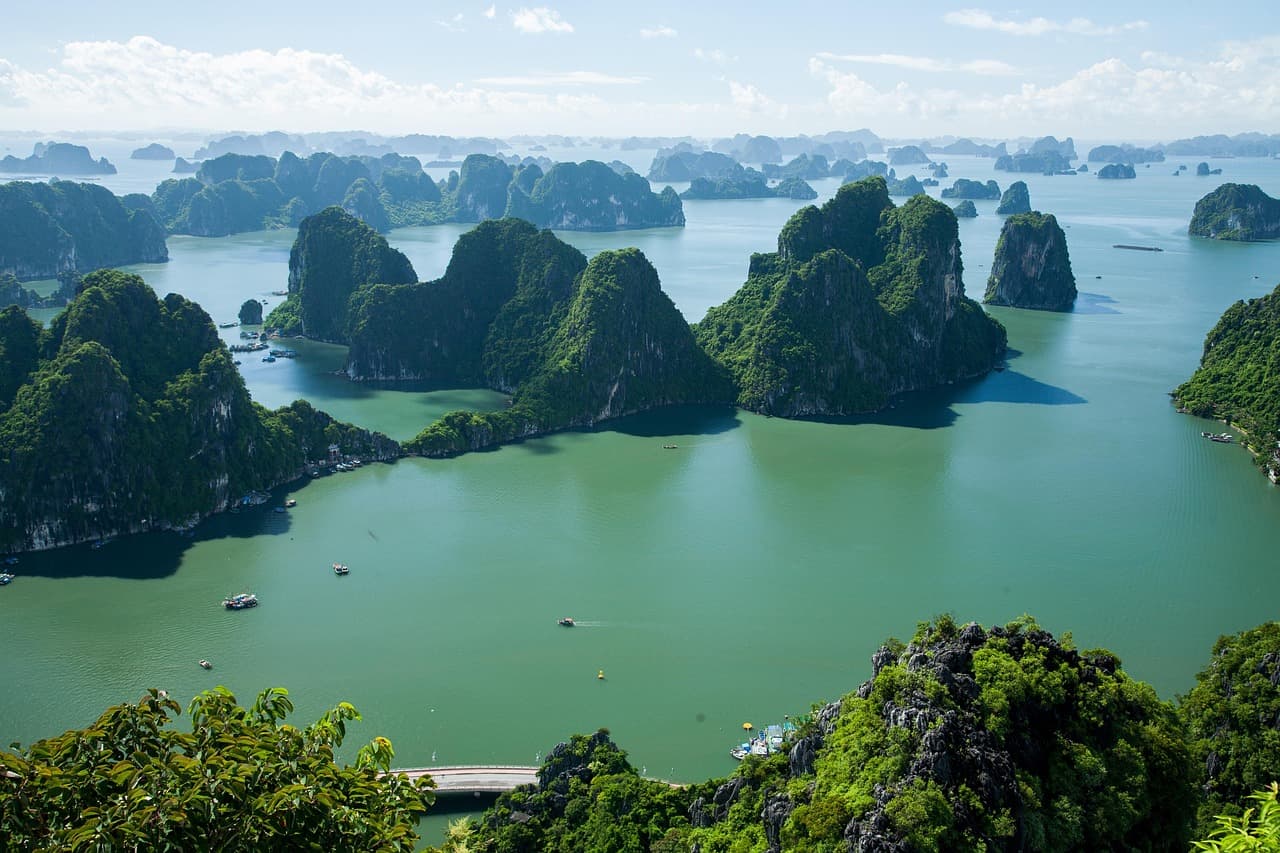
The North (Hanoi, Ha Giang, Sapa, Ha Long Bay) has distinct seasons: spring (March-April) and autumn (late September to November) offer the most pleasant conditions. Summer (May to August) is hot and very humid, with peaks close to 40°C and possible typhoons in July-August that can disrupt Ha Long Bay cruises. Winter (December to February) stays mostly dry but cool and often overcast, with temperatures around 15-20°C in Hanoi — too cool to fully enjoy Ha Long Bay.
The Center (Đà Nẵng, Hội An, Huế) is the most unpredictable, but the March-August window generally brings calm seas and clear skies, ideal for beaches. The rainy season is more concentrated between September and December, with a higher flood risk in Huế and Hội An.
The South (Ho Chi Minh City, the Mekong Delta, Phú Quốc) follows a simpler pattern: dry season from November to April (the best period, especially December-February) and rainy season from May to October, with generally brief late-afternoon showers rather than all-day rain.
Also keep an eye on Lunar New Year (Tết): in 2026 it falls on February 17. Around that date, transport prices spike, trains and buses get packed, and many local businesses close for several days.
How much time to plan, and what itinerary to build
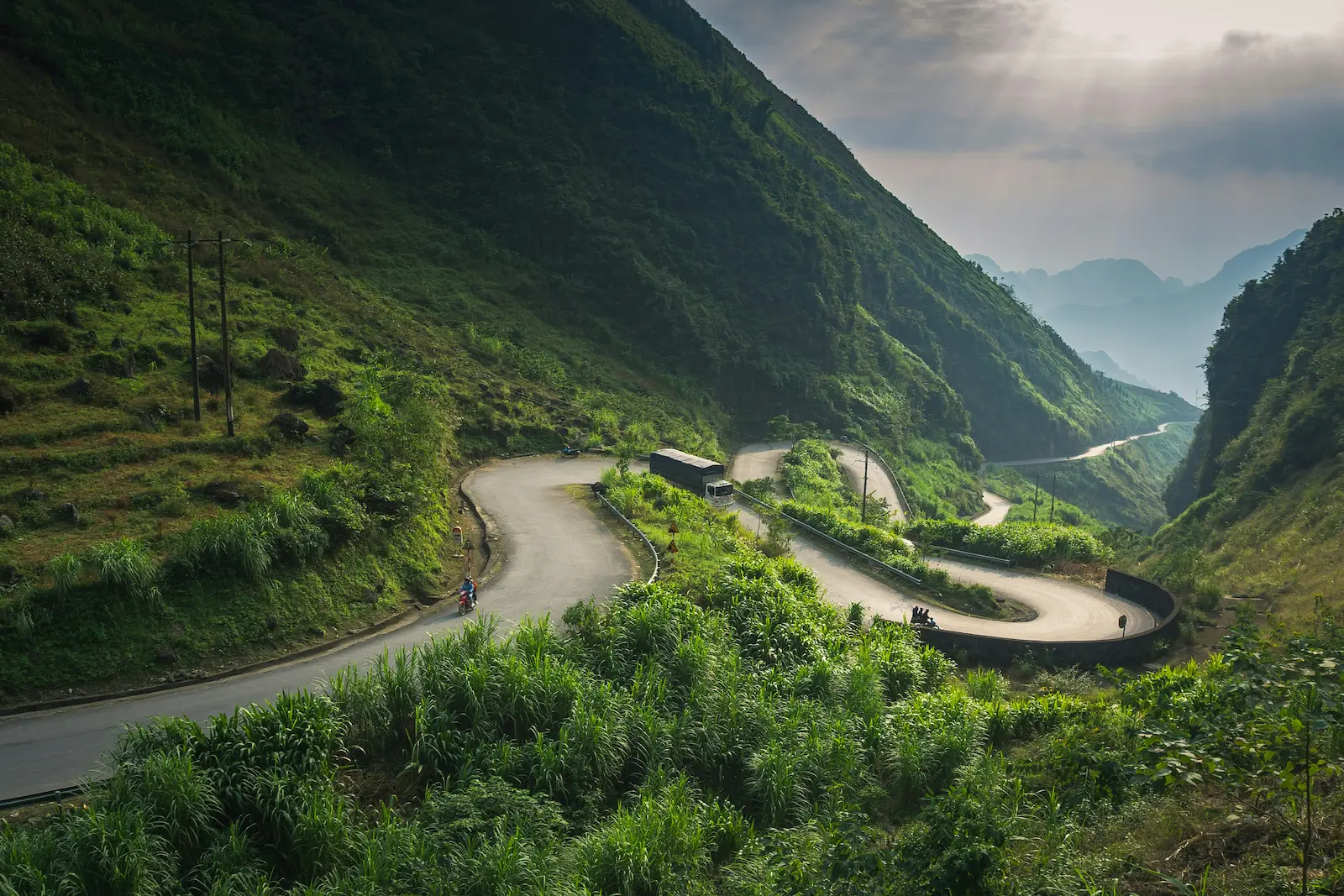
This is one of the most common questions, and the answer mostly comes down to what you want to avoid: the fatigue of too dense a pace.
As a rule of thumb: 10 days is enough to properly cover a single region (the North around Hanoi and Ha Giang, or the Center between Đà Nẵng and Hội An, for example). 2 weeks allow you to link two areas without rushing, such as Hanoi-Ha Long Bay-Hội An-Đà Nẵng, or Ho Chi Minh City-Mekong-Phú Quốc. 3 to 4 weeks open up a fuller north-to-south trip, with real rest stops between the highlights.
A good itinerary leaves room for the unexpected, for encounters, for tiredness, and for the urge to stay one more day somewhere. Trying to see too much too fast is, by far, the most common mistake among travelers who come home disappointed.
"💬 VietNomads field tip
Travel times almost always run longer than the map suggests — mountain roads, city traffic, trains that move slowly. Padding your distances generously preserves your energy for what actually matters.
Budget: what does a trip to Vietnam really cost?
Vietnam is often marketed as a "cheap" destination. The reality is more nuanced: it all depends on your comfort level and the activities you choose, and the gap between two travel styles can be enormous on the ground.
As a rough guide, per person per day, excluding international flights: around 35-50 USD backpacker-style (dorm hostel, street food, local transport, one paid activity every other day); 80-150 USD for mid-range comfort (air-conditioned 3-4 star hotels, a few organized tours, more flexibility on transport); from 250 USD for a high-end trip (5-star hotels, private drivers, tailored experiences).
Over a two-week trip excluding international flights, that works out to roughly: 700-1,400 USD backpacker, 1,400-2,800 USD mid-range, and 3,000 USD and up for high-end. Note too that touristy hotspots like Phú Quốc or central Hội An often cost 1.5 to 2 times the national average, while Huế and the Mekong Delta stay noticeably cheaper.
"💬 VietNomads field tip
Two travelers in the same place can have two completely different trips depending on their accommodation and transport choices. Budget isn't just about means — it's mostly about priorities.
Money, cards and staying connected
The Vietnamese dong (VND) is the only officially accepted currency for most everyday payments, even though US dollars are sometimes tolerated in heavily touristy areas. ATMs are widespread in cities and tourist zones; just expect withdrawal fees that vary by bank, and always keep some cash on hand for markets, small restaurants and rural trips where cards don't work.
For connectivity, the simplest option is an eSIM, from 4 to 10 USD depending on duration and data volume, installable even before you leave home. If your phone isn't eSIM-compatible, a physical tourist SIM card is easy to buy at the airport or in town for around 250,000 VND (about 11 USD), with several gigabytes of data valid for a month.
Getting around Vietnam
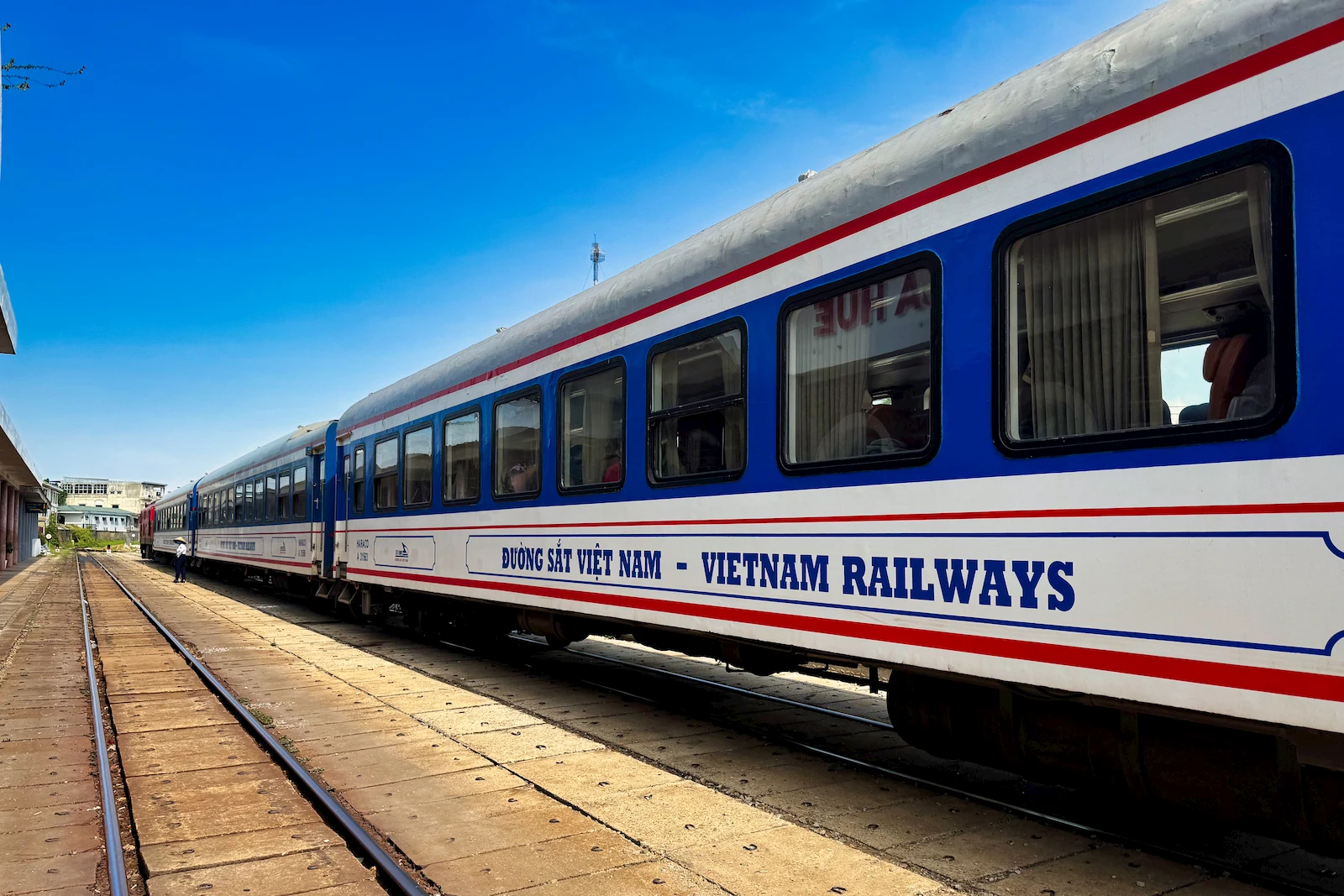
Distances look short on a map, but between mountain roads, sometimes-slow trains and city traffic, journeys can take far longer than expected.
For long distances, domestic flights are often the fastest option and not necessarily the most expensive: Vietnam Airlines fares run roughly 21 to 144 USD depending on the route and how far ahead you book, while budget carriers like Vietjet are generally 30 to 50% cheaper, checked baggage not included.
Trains remain a pleasant option for north-south journeys, especially overnight. On the Hanoi-Đà Nẵng line (about 15-16 hours), expect anywhere from 38 USD for a hard seat to 55 USD for a soft sleeper, up to 125 USD for the newest luxury sleeper cabins. On Đà Nẵng-Ho Chi Minh City, comfortable sleepers start around 48 USD for roughly 16 hours. Book at least two weeks ahead for soft sleepers in high season (October to April, weekends, local holidays).
For shorter trips or areas less well served by rail, sleeper buses and full-day private drivers fill the gaps well, often at a very reasonable price off the main tourist routes.
"💬 VietNomads field tip
Underestimating travel times is one of the most common mistakes we see. It's better to plan generously and arrive rested than to rush from one stop to the next.
Health, vaccines and travel insurance
No vaccine is mandatory to enter Vietnam, except for yellow fever if you're arriving from a country where the disease is present. That said, several vaccines are recommended beforehand: hepatitis A and B, typhoid, rabies, and an up-to-date DTP (diphtheria-tetanus-polio). Depending on your itinerary, a doctor may also discuss Japanese encephalitis or preventive anti-malarial treatment for certain rural or forested areas.
See a doctor or a travel health clinic ideally 4 to 6 weeks before departure, to allow time to complete any vaccination schedule. Protect yourself from mosquito bites too (repellent, covering clothing in the evening): several diseases such as dengue circulate in the country, especially during and after the rainy season.
Travel insurance covering medical costs and possible medical evacuation is strongly recommended: the best private hospitals in major cities are reliable, but costs can add up quickly without coverage, and rural facilities are more limited.
What to pack
The right packing list mostly depends on the season and the regions you'll cross, but a few essentials come up almost every time: light, breathable clothing for the humid heat, a warmer layer if you're passing through the North in winter (December-February, especially at altitude in Sapa and Ha Giang), a light rain jacket for tropical downpours, sturdy walking shoes if trekking is on the itinerary, and high-SPF sunscreen year-round.
Also bring a basic first-aid kit (anti-diarrheal medication, mosquito repellent, plasters), a universal power adapter, and more modest clothing for visiting temples and pagodas, where shoulders and knees generally need to be covered.
Safety and everyday common sense
Vietnam is overall a safe country for travelers, with a very low rate of violent crime. The main nuisances remain pickpocketing in heavily touristy, crowded areas (markets, stations, beaches) and a few classic scams around currency exchange or unmetered taxi fares.
A few simple habits cover most of it: prefer ride-hailing apps over hailing taxis on the street, keep valuables close in crowds, and agree on or check a price before getting into an unmetered vehicle. As a pedestrian or on a scooter, stay alert too: urban traffic is dense and right-of-way rules are more informal than in Europe.
The most common mistakes to avoid
Here's what we see most often among travelers who come home a little disappointed: trying to see everything and packing in too many stops in too little time; not adapting the itinerary to the season and region; booking sleeper trains or domestic flights too late in high season; underestimating real travel times; and lacking flexibility when things don't go to plan — which, ironically, often make for the best stories afterward.
The good news: all of these are easy to avoid with a bit of anticipation, which is exactly what this guide aims to give you.
Conclusion
Preparing your trip to Vietnam doesn't mean planning every minute. It means building a framework solid enough — visa sorted, the right season, a realistic budget, transport booked ahead, health and safety covered — to fully enjoy yourself once you're there, and stay flexible about the rest.
Vietnam is an intense, contrasted, deeply alive country. Well prepared, it becomes smooth, surprising and unforgettable.