What Is the Hoi An Lantern Festival?
Once a month, as night falls, Hoi An's old town seems to vanish. Not literally: its ochre-yellow facades, moss-covered tile roofs and Japanese covered bridge stay exactly where they are. But the electricity disappears. On the evening of every full moon, shopkeepers in the old quarter switch off their signs and light bulbs, leaving only hundreds of silk lanterns glowing from façades, trees and bridges.
Locals simply call this ritual đêm phố cổ, "night of the old town." It was introduced in the late 1990s to revive the atmosphere of this UNESCO World Heritage trading port, back when Chinese, Japanese and Dutch junks anchored on the Thu Bồn River. Today it's become one of Vietnam's most photographed tourist events, yet also one of the few that still feels genuinely local: families sitting on their doorsteps, incense burning in front of altars, children running around with a paper lantern in hand.
"💬 VietNomads field tip
The lantern festival isn't a single staged show: the whole old town changes mood. Don't just stick to the main street, Nguyễn Thái Học, which gets mobbed by photographers — the quieter side lanes are often even more beautiful at this hour.
When to Go: Upcoming Full Moons in 2026
The festival takes place on the 14th day of every lunar month, roughly once every four weeks. For travelers planning a trip in the coming months, here are the remaining 2026 dates:
August 26, September 24, October 23, November 22 and December 22.
September 24 deserves special attention: it falls on the eve of Tết Trung Thu, the Mid-Autumn Festival, one of the most anticipated celebrations of the year in Vietnam. The old town gets even livelier, with star- and carp-shaped lanterns sold at every stall and a family atmosphere built around celebrations for children. If your trip falls in late August, the August 26 full moon is well worth catching too, typically with noticeably smaller crowds than September.
One useful clarification: even on nights without a full moon, Hoi An keeps its lanterns lit year-round, since they're part of the old town's permanent decor. What changes during the festival is the deliberate switch-off of electric lighting, which completely transforms the atmosphere.
A Town That Goes Dark to Shine Brighter
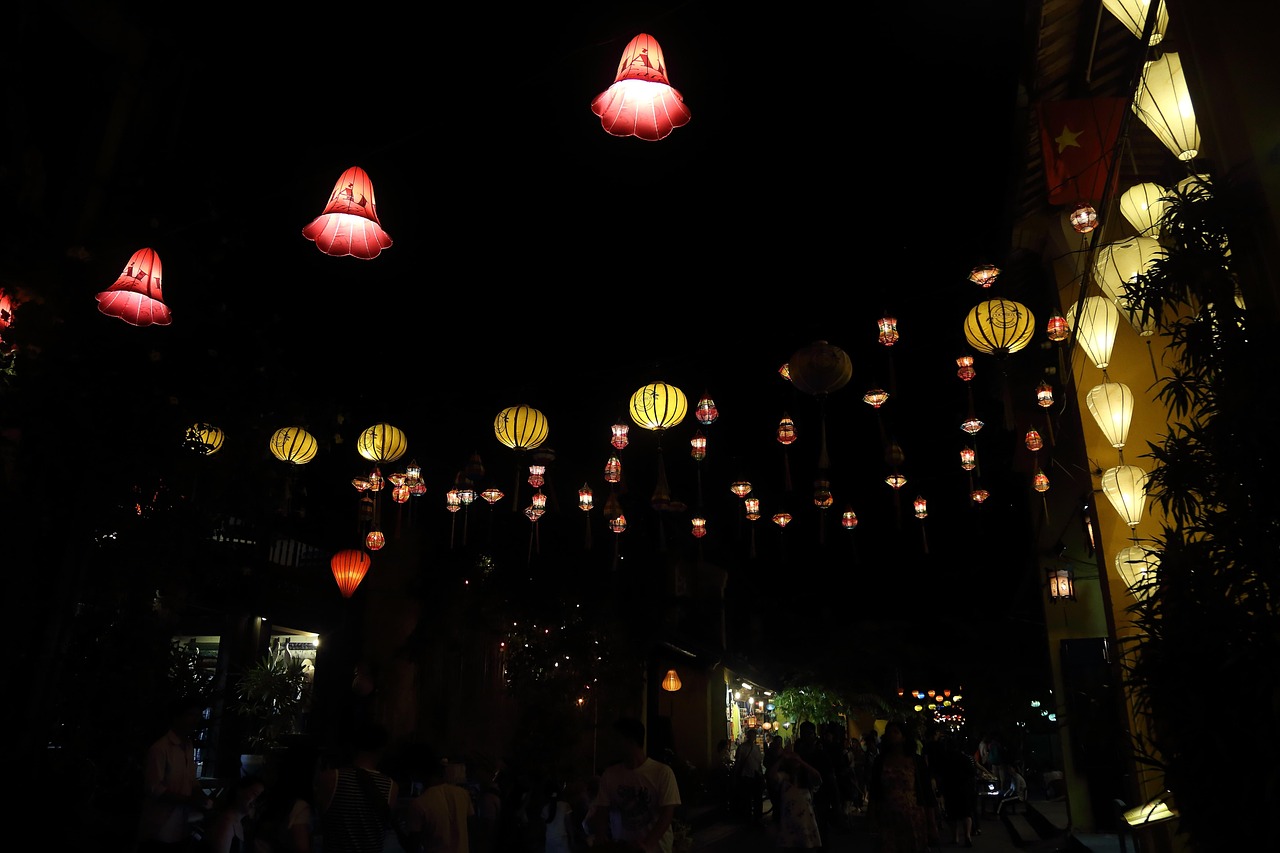
It's best to arrive before nightfall, around 5:30-6pm, to watch the transition. Shopkeepers start setting out low stools on the sidewalks, vendors selling small candle-lit paper lanterns to float on the water take their spots near the bridges, and the street gradually fills up. Then, between 6 and 7pm depending on the neighborhood, the electric lights switch off one by one. Within minutes, the old town shifts into a warm, golden glow, echoed in the reflections on the Thu Bồn River.
The covered Japanese Bridge (Chùa Cầu), recently restored, becomes one of the most sought-after viewpoints, along with the riverside quays where colorful paper lanterns reflect on the dark water. Plan to stay until around 9-10pm to fully soak up the atmosphere before the town gradually switches its lights back on.
The Boat Ride and Lantern Release on the Thu Bồn River
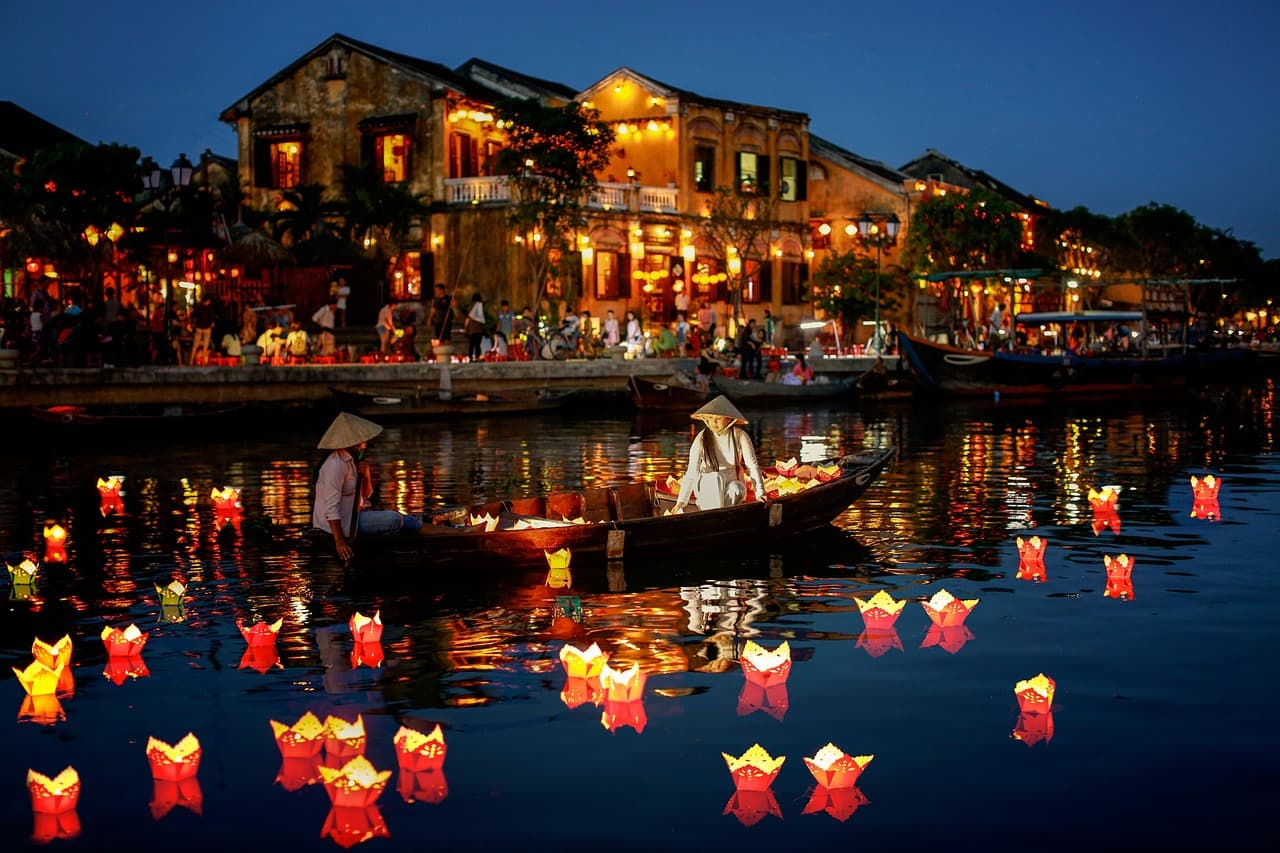
The festival's signature activity remains the small wooden boat ride on the Thu Bồn River, with a boatman or boatwoman rowing at the stern and a candle-lit lantern set on the water at each stop. Boat piers are mainly found along Bạch Đằng Street and near An Hội Bridge, on the south side of the river. Rides typically last around 20 minutes, running from early evening until about 9:30pm.
Official prices, posted in Vietnamese and English at the ticket booths, run around 170,000 VND for a boat carrying 1 to 3 people and 220,000 VND for 4 to 5 people (price per boat, not per person). Life jackets are mandatory on board, which is reassuring.
For the festival's most sought-after photo — dozens of small lanterns floating on the dark water — it's worth heading to a pier slightly away from the busiest departure points, where the river is less crowded with boats.
Making Your Own Lantern: A Workshop Worth Trying
Several craft workshops, scattered through the old town's lanes and on Cẩm Kim Island just across the river, teach visitors how to make a bamboo-and-silk lantern under the guidance of a local artisan. Plan for about 45 minutes to an hour to build the frame, stretch the fabric and walk away with your own creation — a far more original souvenir than a ready-made lantern bought in a shop. It's also a great way to chat with locals who've made a living from this craft for generations, and to understand why the lantern became the town's visual symbol.
Night Market, Street Food and Local Atmosphere
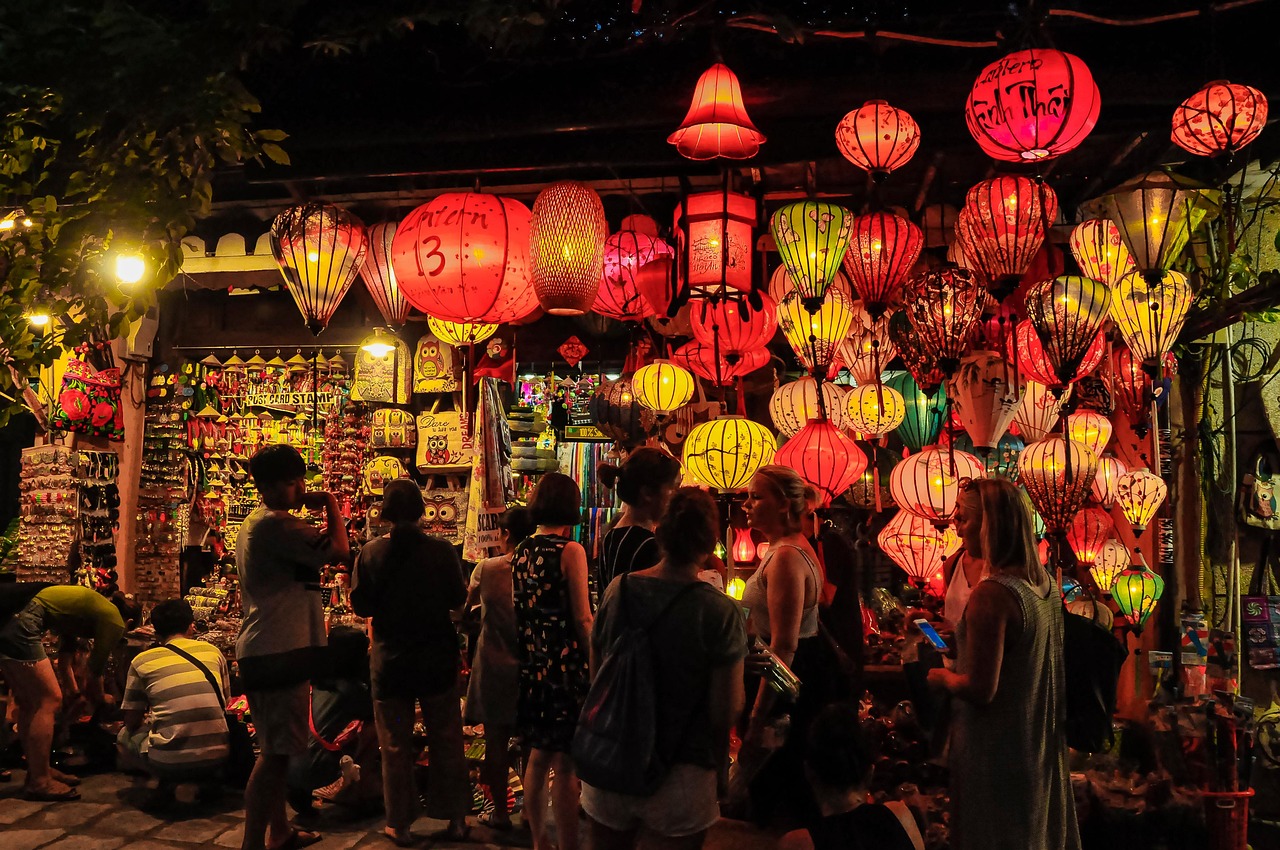
The night market, set up along the riverside on the An Hội side, is in full swing on festival evenings: souvenir stalls, traditional games like bài chòi (a sung form of bingo typical of central Vietnam), and above all a dense cluster of street food stands. It's the perfect moment to try cao lầu, thick noodles served with grilled pork, fresh herbs and crispy pork rinds — a specialty found authentically only in Hoi An, traditionally made with water from an ancient town well. Local bánh mì, often ranked among the country's best, and bánh xèo (crispy savory pancakes) round out an evening of grazing through the stalls.
Practical Tips for Enjoying the Festival Smoothly
Hoi An's old town can only be explored on foot or by bicycle on festival evenings: motorized traffic is banned within the historic perimeter from late afternoon onward. Comfortable shoes are a must, given the walking and uneven paving stones involved.
Entry to the old town requires a combined ticket (around 120,000 VND), which grants access to several historic sites such as the Chùa Cầu bridge, an old house or a communal hall. This ticket isn't systematically checked on the main streets but is required at the entrance of listed sites.
To avoid the thickest crowds, which build up between 7 and 8:30pm along the main quays, aim for an earlier arrival (around 5:30pm) or a later visit after 9pm, when the light is just as beautiful but the lanes gradually empty out.
Getting to Hoi An and Where to Stay
Hoi An has no airport of its own: access is via Đà Nẵng International Airport, about a 45-minute drive away (30 km), well served by domestic flights from Hanoi and Ho Chi Minh City as well as a handful of direct international routes. If you're combining this festival with a longer stay on the central coast, Đà Nẵng and Huế are both easy to visit before or after.
To fully soak up the atmosphere, it's better to sleep in Hoi An itself rather than doing a day trip from Đà Nẵng: that way you can enjoy the old town before the evening crowds arrive and linger after the day-trip groups leave, once the town is given back to its residents. Plan for at least one night, two if you also want to enjoy An Bàng Beach or a bike ride through the surrounding rice paddies the next morning, while the town is still asleep.
Frequently Asked Questions About the Hoi An Lantern Festival
Does the lantern festival happen every month? Yes, it returns every month, on the evening of the 14th day of the lunar calendar, roughly every 29 to 30 days. The date therefore shifts each month on the solar calendar.
Do you have to pay to see the lanterns or walk around the old town at night? Walking the streets and watching the lights switch off is free. Only entry into certain historic monuments (via the combined ticket) and optional activities like the boat ride or the lantern-making workshop cost extra.
What's the best date to avoid the crowds? Full moons that don't coincide with a major festival (like August 26, 2026) are noticeably less crowded than the one falling on the eve of Tết Trung Thu, which draws large numbers of Vietnamese families themselves.