A Month Like No Other in the Vietnamese Calendar
If you travel to Vietnam at the end of summer, you may notice something unusual: small piles of burning paper on the sidewalk, plates of fruits and puffed rice placed in front of houses and shops, and a bit more incense in the evening air. You've entered the tháng cô hồn, literally the 'month of wandering souls,' which corresponds to the 7th month of the lunar calendar.
This month holds a special place in Vietnamese culture, at the crossroads of Buddhism, Taoism, and older folk beliefs. According to tradition, this is the time when Diêm Vương, the ruler of the underworld, opens the gates of the afterlife: souls who have no descendants to pray for them return to wander the earth, hungry and restless. To appease them, families and merchants offer food, in a gesture of compassion rather than fear.
Far from being a minor folkloric curiosity, this month concretely influences daily life: postponed decisions, rituals in homes, and a particular atmosphere in pagodas. For a visitor, it's an opportunity to observe a rarely shown facet of Vietnam.
When Does the Tháng Cô Hồn Fall in 2026?
The Vietnamese calendar being lunar, the dates change each year. In 2026, the 7th lunar month begins on August 13 and ends on September 10 (solar calendar). The peak of the month, the famous Rằm tháng Bảy (15th day), falls on August 27, 2026 — it's the moment when the boundary between the world of the living and the dead is considered the thinnest.
This same day corresponds to the Vu Lan festival, one of the most touching Buddhist celebrations in the country, entirely dedicated to filial piety and gratitude towards parents.
If you plan a stay between mid-August and mid-September, you will experience your trip during this period — without it changing anything about the safety or practical organization of your stay.
Vu Lan: The Festival of Parents, Living and Deceased
Vu Lan originates from a Buddhist legend where a disciple, Mục Kiền Liên, saves his deceased mother from torments by praying with the help of the monastic community. This story gave birth to a festival where filial love is celebrated, whether a parent is still alive or already gone.
In pagodas, a touching ceremony takes place on this day: each participant receives a rose to pin on their chest. A red rose for those who still have their mother alive, a white rose for those who have lost her. The emotion is often palpable, especially for those who, for the first time, wear a white rose.
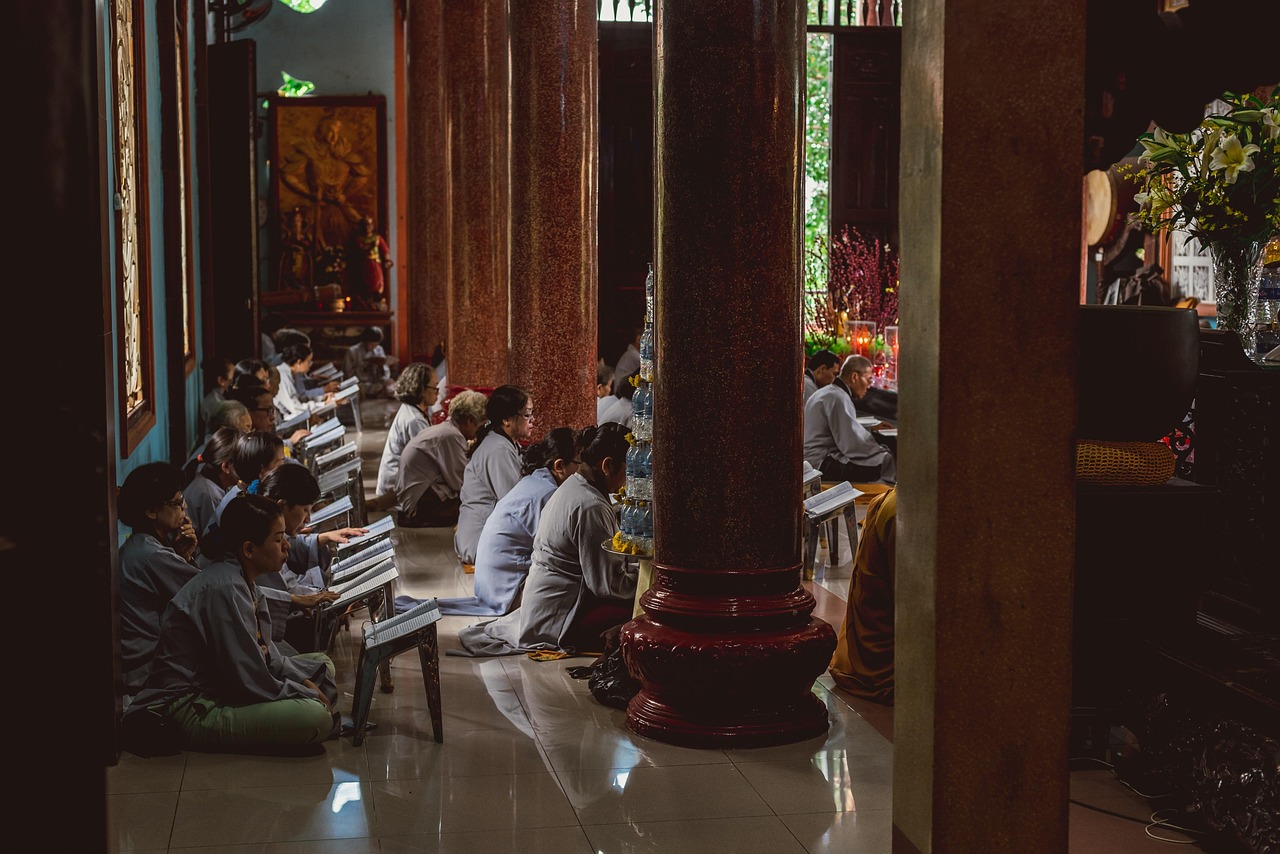
Many families also take this day to gather, cook together, or simply call their parents who live far away. This is a very human side of Vietnam, a thousand miles away from clichés about rice fields or street food — and yet just as revealing of local culture.
What You Will See in the Streets
Concretely, what does the tháng cô hồn look like for a traveler? In large cities like Hanoi, Ho Chi Minh City, or Huế, several elements become visible from the first week of the lunar month.
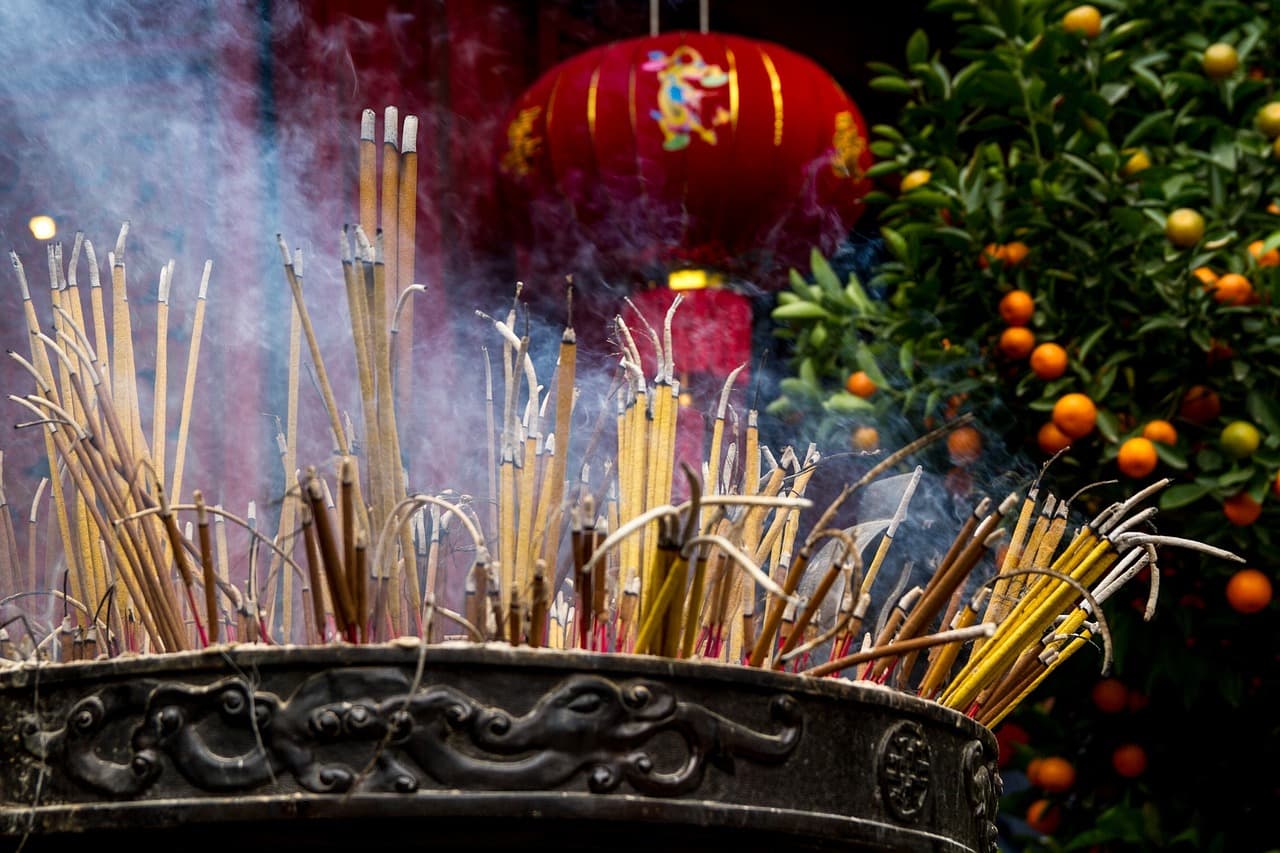
Offerings called cúng cô hồn are arranged in the late afternoon in front of houses and shops: puffed rice, fruits, candies, sometimes small amounts of money in coins. Fake paper money (vàng mã) and miniature paper clothes are burned in small metal braziers on the sidewalk, a gesture meant to provide for the needs of wandering souls in the afterlife. Pagodas, especially in Huế, on the banks of the Perfume River, and in the Chợ Lớn district in Ho Chi Minh City, fill with devotees come to pray and make donations.
The atmosphere is not scary; it's rather contemplative, almost gentle. Many travelers describe it as one of the most authentic moments of their stay, precisely because it's not staged for tourists.
"💬 VietNomads field tip
If you see a small paper fire on a sidewalk in the late afternoon, keep your distance rather than stopping just in front to take a photo: these are private offerings, often made by a merchant in front of their own shop. A discreet shot from a few meters is still possible and respectful.
Popular Beliefs and Traditional Taboos
The tháng cô hồn is accompanied by a series of beliefs passed down from generation to generation. Many Vietnamese, without being particularly superstitious in daily life, prefer to avoid certain important decisions during this month: signing a real estate contract, getting married, moving into a new home, or launching a business.
It's also said that it's better to avoid bathing in the sea or river late at night, whistling in the darkness, or leaving a door open for too long into the night. These practices vary greatly from region to region and from family to family: some follow them to the letter, others don't even think about them.
For a traveler, the essential thing to remember is that these beliefs mainly concern the major life decisions of locals, not tourism. Booking a flight, visiting a pagoda, going on a hike, or tasting a bánh mì on a tháng cô hồn day poses absolutely no problem.
Should You Avoid Traveling to Vietnam During This Period?
This is one of the questions we're most often asked at VietNomads as this month approaches: 'Is it a bad time to come?' The answer is no. The tháng cô hồn has no impact on safety, transportation, the opening of tourist sites, or the availability of accommodations.
It's even, in many ways, an interesting time to choose: fewer tourists than in the high season at the end of the year, favorable weather in the center and south of the country, and a unique opportunity to observe rituals that most international visitors will never encounter during a classic trip.
"💬 VietNomads field tip
The only real reflex to have: if you're staying with a host family or in a small family hotel, don't be surprised to see the reception or lobby temporarily occupied by a small ceremony in the late afternoon. It only lasts a few minutes and is part of the normal rhythm of the house.
Where to Experience This Atmosphere in the Most Authentic Way
Certain cities are particularly well-suited for observing this very special month. In Huế, the banks of the Perfume River and historical pagodas like Thiên Mụ take on a quasi-meditative atmosphere at dusk. In Ho Chi Minh City, the Chinese quarter of Chợ Lớn, with its pagodas like Giác Lâm or Nghĩa An, organizes impressive collective ceremonies.
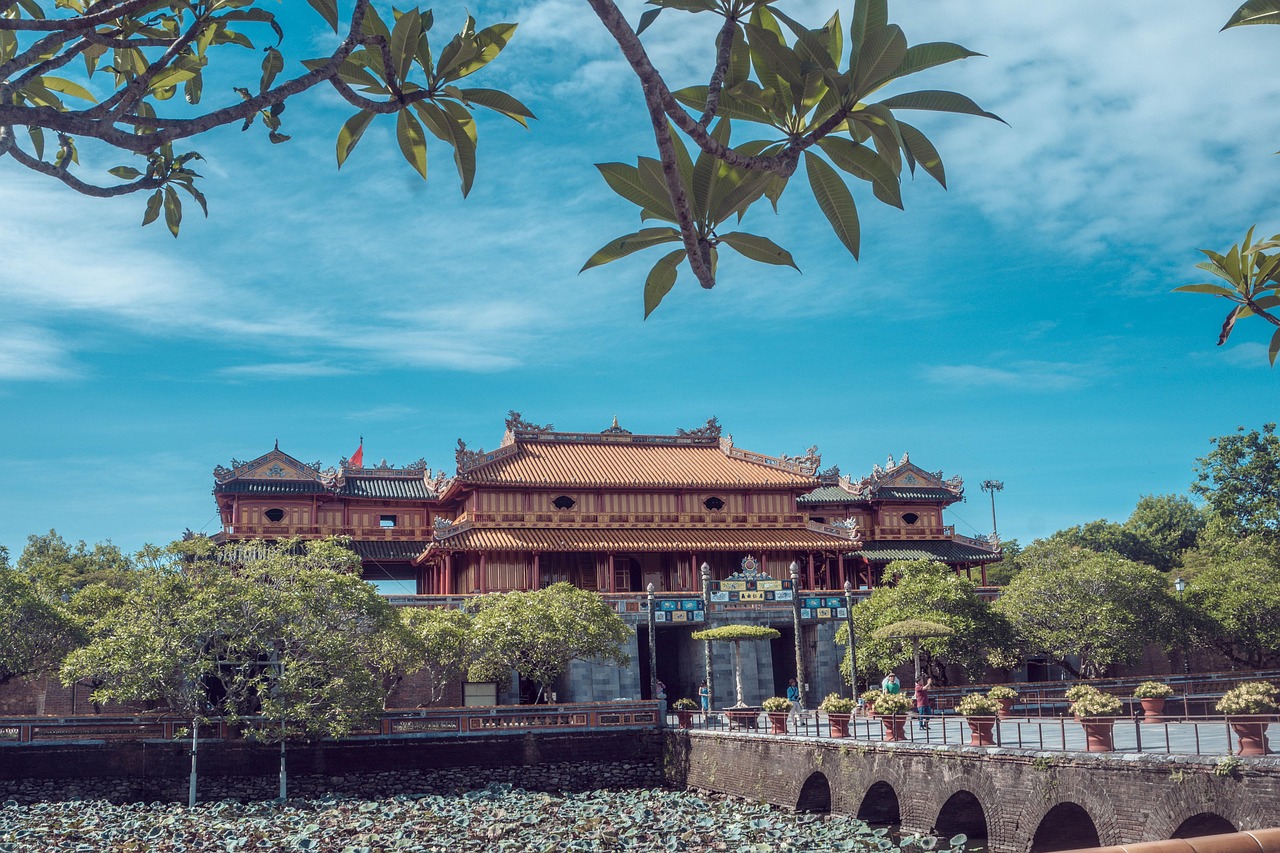
In Hanoi, the old quarter concentrates many small street offerings, while the Quán Sứ pagoda, seat of the Buddhist Church of Vietnam, attracts devotees from all over the capital. Finally, in Hội An, the lanterns that already illuminate the streets each month take on an additional significance this month, between celebration and contemplation.
Practical Tips for Visiting a Pagoda During the Tháng Cô Hồn
If you want to attend a ceremony or simply visit an active pagoda during this period, a few common-sense rules are enough: prefer a sober outfit that covers your shoulders and knees, speak softly inside places of worship, and always ask permission before photographing a ceremony or a person praying.
It's also appreciated to make a small donation in the boxes provided for this purpose if you attend a ceremony, without it being obligatory. Finally, avoid walking in front of an altar while a prayer is in progress: rather go around to the sides.
The tháng cô hồn is neither a festival to fear nor a simple folklore to observe from a distance: it's a sincere window into how Vietnam maintains its relationship with memory, family, and transmission. For those who take the time to understand it, this month can transform a simple trip into a cultural experience that will remain in memory for a long time.
At VietNomads, we can adjust your itinerary to include a guided visit of an active pagoda during this period, with cultural explanations given by a local guide — a simple way to go beyond the souvenir photo and really understand what you're observing.