Why Cao Bằng now: northern Vietnam's shortest window
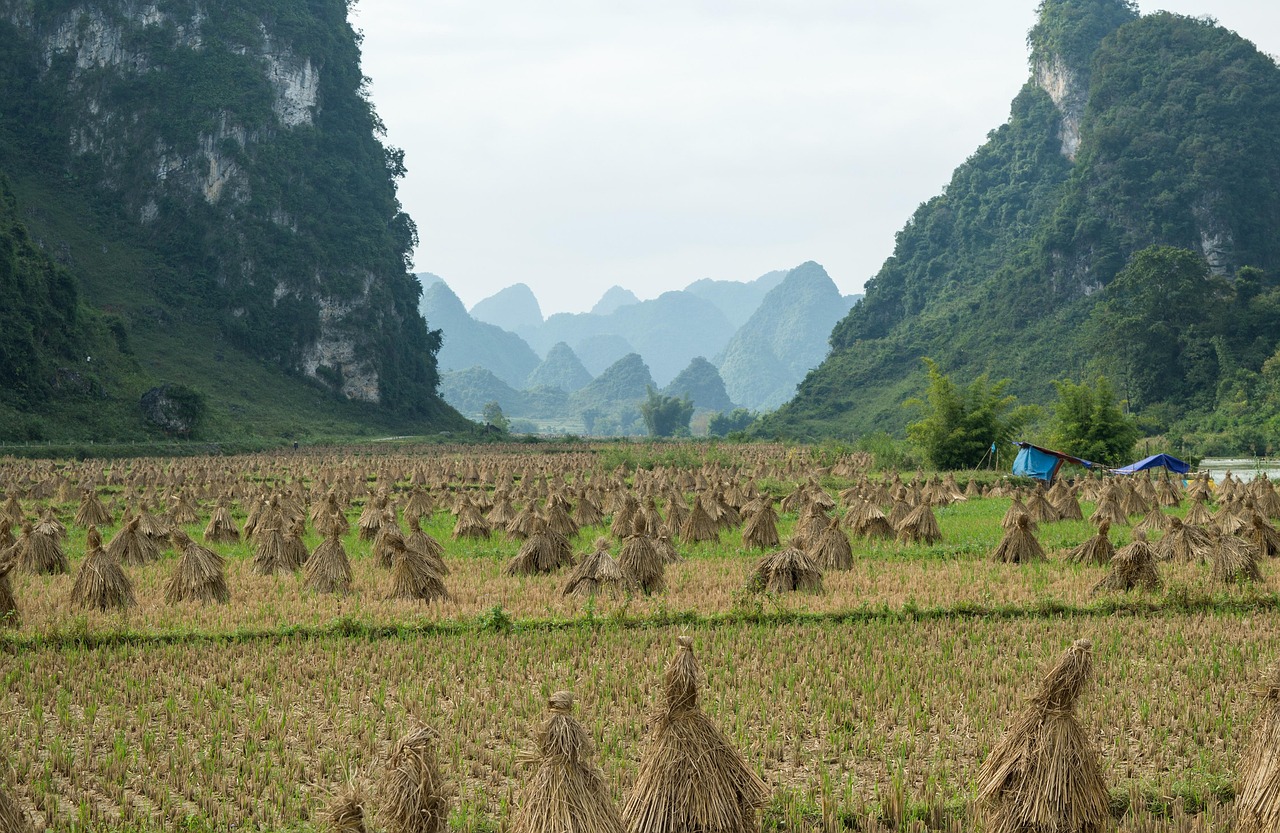
There is a stretch of a few weeks in Vietnam's northeast that regular travellers watch closely. It begins as the rainy season fades and ends before November brings the first real cold. During those weeks, Cao Bằng province offers a combination the rest of the year never delivers: waterfalls swollen by months of monsoon, a sky that has finally cleared, and rice fields turning from green to gold at the foot of limestone mountains.
And yet Cao Bằng remains one of the least-visited northern provinces. Where Hà Giang and Sapa absorb the crowds, this border region 280 kilometres northeast of Hanoi still holds entire valleys with no tour buses and no souvenir shops. That gap is exactly what makes it interesting right now: it delivers the landscapes that built northern Vietnam's reputation, with visitor numbers closer to what Hà Giang saw a decade ago.
The heart of the province has been a UNESCO Global Geopark since 2018, under the name Non Nước Cao Bằng. The designation recognises a landscape of karst formations, caves, lakes and fossil valleys spanning more than 500 million years of geological history. In practical terms for a traveller, it means this: you can drive for three days through limestone towers and never see the same view twice.
Ban Gioc Waterfall: what to know before you go
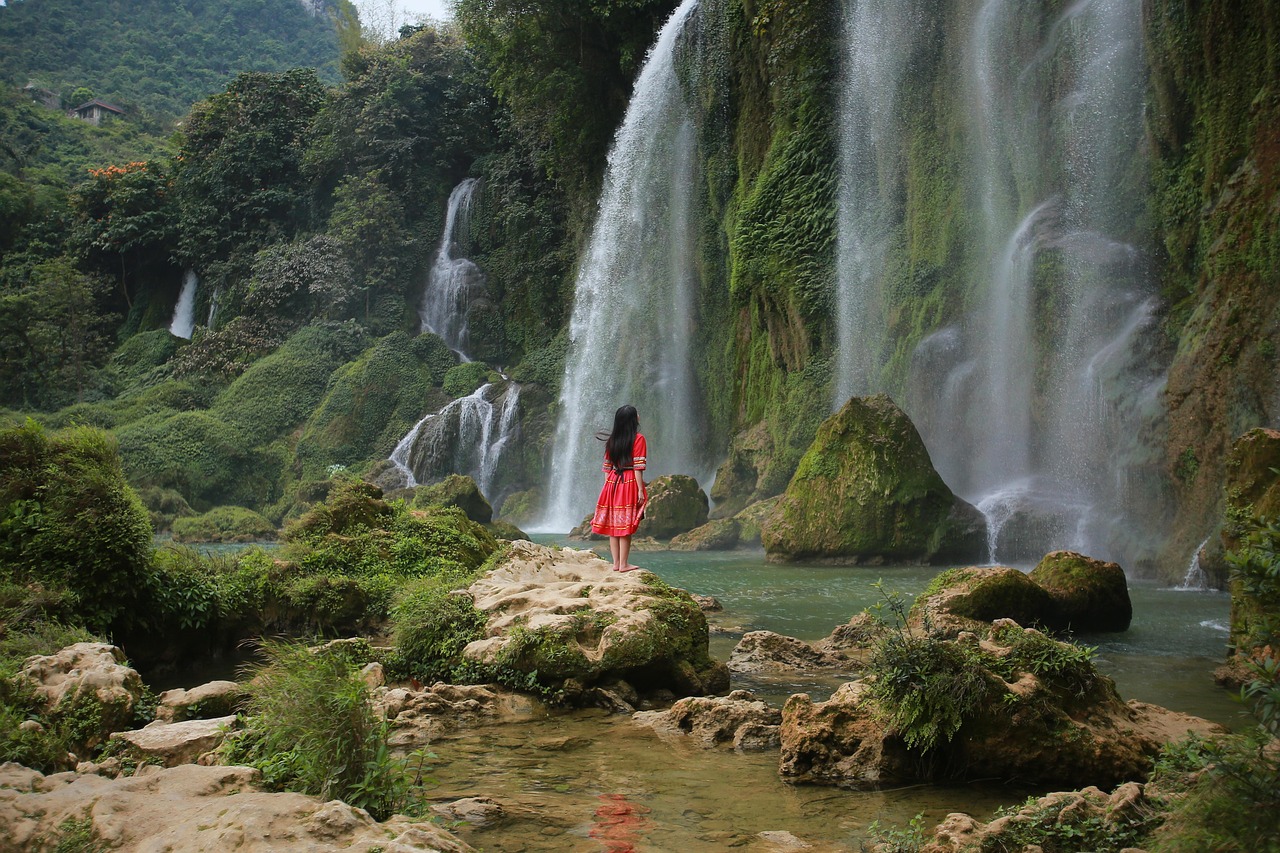
Ban Gioc (Bản Giốc in Vietnamese) is why most travellers head to Cao Bằng in the first place. For once, the reality matches the photographs. At over 300 metres wide, it is Vietnam's widest waterfall and one of the largest border waterfalls in the world: the Quây Sơn river forms a natural boundary between Vietnam and China here, so the left half of whatever you photograph sits on Chinese territory, where it is known as Detian.
The falls do not drop in a single sheet. They spread across three successive limestone tiers separated by vegetated islets, which gives them that distinctive fan-shaped silhouette. In high water the tiers merge into one continuous curtain; in the dry season they separate into distinct, slimmer cascades that are easier to read but far less powerful.
This is where timing matters. From September through October the river is still fed by summer rain, but the sky has cleared and the water has regained its turquoise colour (it turns muddy brown at the monsoon peak in July and August). You get the best of both seasons at once: a spectacular volume of water and clear water to look at.
On site, the visit happens in two stages. From the wide grassy esplanade you take in the falls as a whole — the classic viewpoint. Then you walk down to the bank, where motorised bamboo rafts carry visitors to within a few dozen metres of the curtain of water, right up to the painted border marker. The crossing lasts about fifteen minutes and is paid for separately from site admission. It is loud, it is wet, and it is by far the best way to grasp the scale of the place.
"💬 VietNomads field tip
Get there before 9am. It is not only about crowds: at Ban Gioc the morning light comes from behind the falls on the Vietnamese side, and it is the only time of day when you can get turquoise water and a clear sky in the same frame. After 11am the heat haze rises and coach groups arrive in numbers on the Detian side, which changes the atmosphere considerably. Second habit worth forming: bring a waterproof pouch for your phone before you step onto the raft — the spray is badly underestimated.
An important note on the "cross-border tourism zone"
Since October 2024, a cross-border tourism cooperation zone has officially linked the Ban Gioc site on the Vietnamese side with Detian on the Chinese side. It allows groups to cross the border on the spot, without a standard visa, for a supervised visit to the other bank.
Be careful, though, about a confusion that circulates widely on blogs and forums: this arrangement is reserved for Vietnamese and Chinese nationals. Travellers from Europe, North America, Australia and elsewhere cannot use this crossing and must visit the waterfall from the Vietnamese side only. That takes nothing away from the experience — the best overall view is on the Vietnamese side regardless — but it is worth knowing before you build your itinerary.
One other practical point: the waterfall sits in a sensitive border zone. Always carry your passport, never cross a marked border post, and respect the military signage around the site. Checks are rare but real.
Ngườm Ngao Cave, five minutes from the falls
About five kilometres from Ban Gioc, Ngườm Ngao Cave is the natural companion to the waterfall, and the vast majority of travellers do both in the same half-day. Its name means "tiger cave" in the Tày language, a reference to the roar of the underground river running through it.
The network stretches nearly three kilometres, of which roughly one kilometre is lit and fitted with walkways and stairs. The visit takes about an hour and requires no particular fitness, though the floor stays damp and slippery in places — closed shoes with a grippy sole are considerably more comfortable than flip-flops. Admission costs 45,000 dong, around 1.70 US dollars.
Beyond its formations, Ngườm Ngao's real value is as a rain plan: if the sky closes in over Ban Gioc, switch to the cave and come back to the falls an hour later, once the light has returned.
The Cao Bằng Loop: three days of passes and valleys
Reducing Cao Bằng to its waterfall would be a mistake. The province is best explored as a driving loop, along the lines of the Hà Giang loop but with far less traffic. The classic circuit runs 250 to 300 kilometres from Cao Bằng city and fits comfortably into three days.
A structure that works well:
Day 1 — Cao Bằng, the tight switchbacks of Mã Phục Pass, then the Thang Hen lakes, a chain of turquoise pools connected by an underground network whose water level shifts by several metres with the season. Night in Trùng Khánh or at a Tày homestay near the falls.
Day 2 — Ban Gioc early in the morning, Ngườm Ngao around midday, then the Phong Nậm valley in late afternoon, when the low light reaches into the valley floor. Night on site.
Day 3 — Back towards Cao Bằng, with an optional detour via Pác Bó cave and the border-road passes, including the famous Khau Cốc Chà and its fifteen hairpin bends stacked up the mountainside.
Two options for getting around. A scooter or motorbike gives total freedom, but Vietnamese mountain roads demand real two-wheel experience and a valid international licence — without one you will not be covered by your insurance in an accident. A car with a driver lets you watch the landscape instead of the road, and remains what we recommend for most of our travellers, particularly with families or on wet days.
Phong Nậm and the valleys off the route
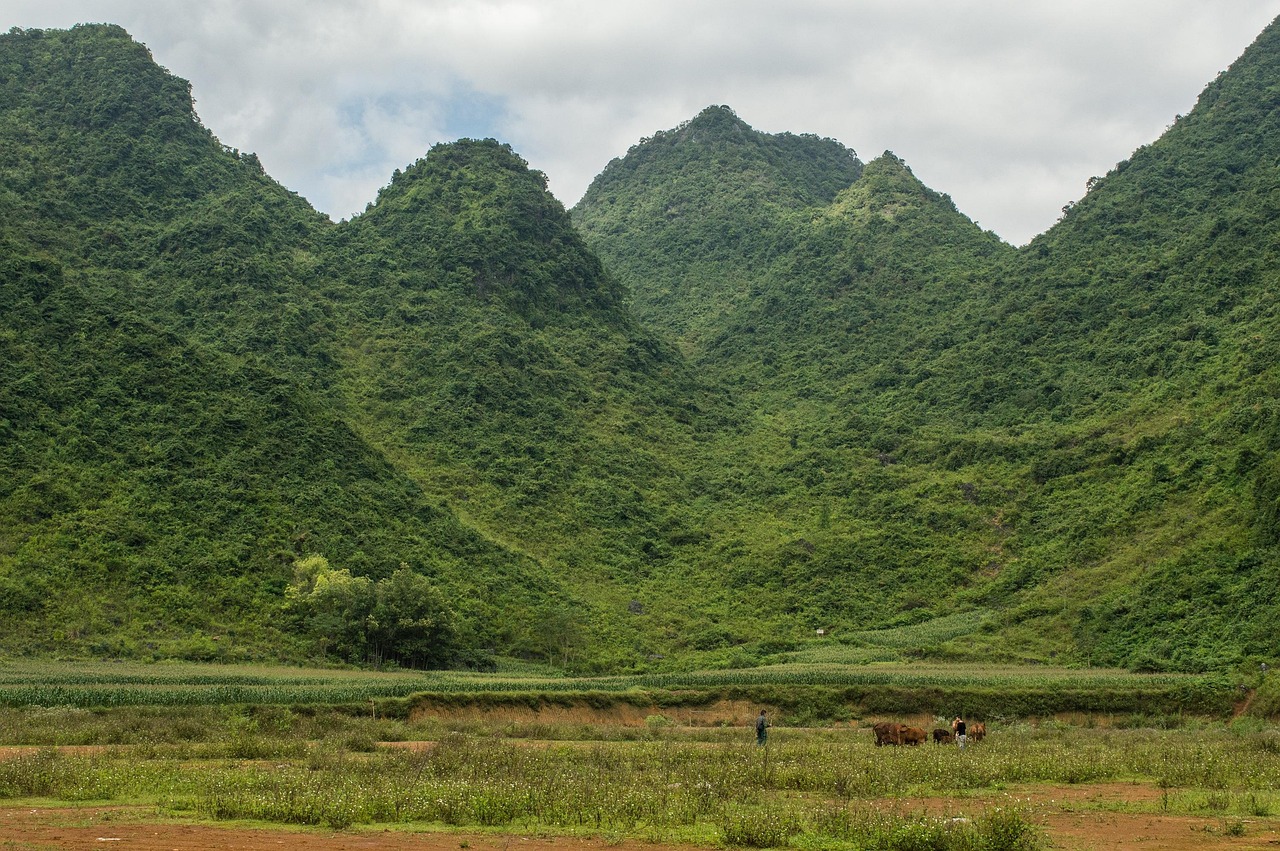
If you were to keep only one memory of Cao Bằng beyond the waterfall, it would probably be this one. The Phong Nậm valley runs for some fifteen kilometres along the Quây Sơn river, between sheer limestone towers, Tày stilt-house villages and rice fields occupying every flat scrap of ground.
The road through it is paved, narrow and almost empty. You pass water buffalo, children cycling home from school, women threshing rice on tarpaulins at the roadside. In late September and October the valley is mid-harvest: the rice is cut and stacked into conical mounds in the fields, and the smell of drying straw follows you the whole way.
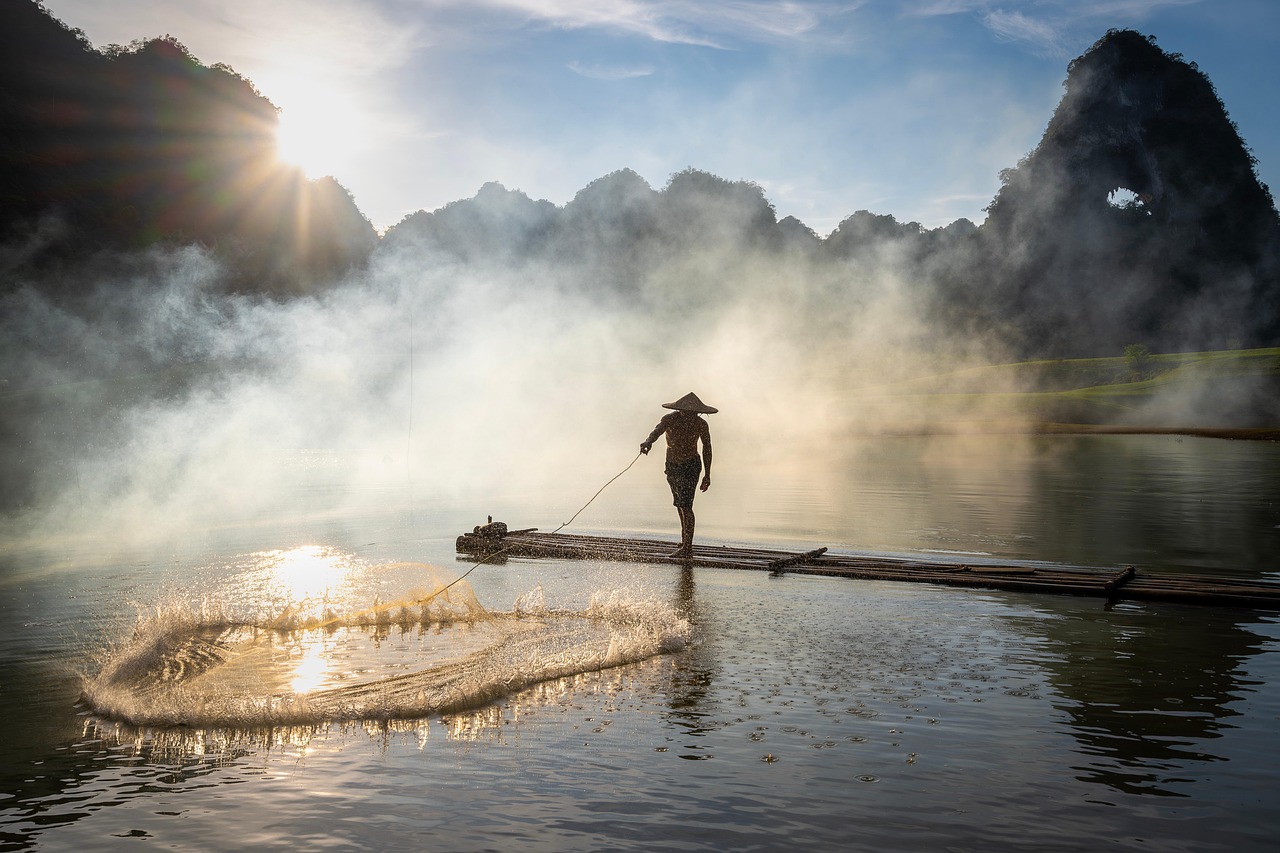
The best time to drive it is first light, when mist still sits on the valley floor and fishermen cast their nets from bamboo rafts on the Quây Sơn. The villages of Khuổi Ky, with its traditional Tày stone houses, and Bản Giốc offer homestays that put you on the spot at that hour.
Further north, the Bảo Lạc area and the terraced fields of Bảo Lâm round out the picture for anyone with a spare day. Fewer people make the climb, the roads are twistier, and that is precisely why they are worth it.
Getting to Cao Bằng from Hanoi
There is no airport in Cao Bằng: everything happens by road, roughly 280 kilometres from Hanoi.
Night buses and limousine vans leave mainly from Mỹ Đình bus station. Allow 6 to 8 hours depending on the vehicle and the number of stops, at fares from around 200,000 dong (roughly 8 US dollars) for a standard sleeper bus to 400,000 dong and up (around 16 dollars) for a 9-seat limousine van, which is more comfortable and includes hotel pickup. Daytime limousines are a good choice if you want to enjoy the scenery past Lạng Sơn.
A private car with driver remains the most flexible formula: you can leave early, stop wherever you like, and move straight onto the loop without doubling back through Cao Bằng city.
A word on the Đồng Đăng – Trà Lĩnh expressway, often mentioned in travel articles: it is still under construction in 2026 and should cut journey times noticeably once open. Until it is in service, plan your travel times on the figures above rather than on the announced projections.
One itinerary tip to finish: Cao Bằng pairs very well with Bắc Kạn and Ba Bể Lake on the way back to Hanoi, which avoids driving the same road twice and adds a night beside one of the country's finest natural lakes.
Where to stay and what to budget
Accommodation in Cao Bằng falls into three families. In town, simple, functional hotels at around 300,000 to 600,000 dong a night (12 to 24 US dollars) make a practical stop on arrival or departure. Around Ban Gioc and in the valley, Tày homestays — often converted stilt houses — sit in the same range and frequently include the family dinner, which is often the best meal of the trip. Finally, one or two upmarket properties have opened close to the falls, at considerably higher rates, around 2 to 4 million dong.
On overall budget, Cao Bằng remains one of the cheapest northern provinces. Excluding transport from Hanoi, allow 45 to 65 US dollars per person per day for a comfortable set-up with a shared car and driver, and considerably less if you travel independently. Site admissions are modest: 45,000 dong for Ban Gioc, the same for Ngườm Ngao, and the bamboo raft runs around 50,000 dong per person.
Bring cash. ATMs exist in Cao Bằng city and in Trùng Khánh but become scarce in the valleys, and many homestays and small restaurants accept neither cards nor QR payment.
What to eat in Cao Bằng
Cao Bằng's cooking belongs to the Tày and Nùng minorities, and it does not resemble what you eat in Hanoi. The signature dish is phở chua, literally "sour pho": rice noodles served warm, without broth, with caramelised pork, roast duck, crushed peanuts, herbs and a sweet-and-sour dressing based on vinegar and tamarind. It is closer to a noodle salad than a soup, and it is excellent.
You will also find the local bánh cuốn, different from its Hanoi version: the stuffed rice rolls are served straight into a bowl of hot bone broth with a poached egg, rather than dry with a dipping sauce alongside. Hạt dẻ Trùng Khánh, the chestnuts of Trùng Khánh, are the region's particular pride — and they are harvested from late September to early November and sold roasted at the roadside. One more reason to come at this time of year.
For the curious, vịt quay 7 vị (seven-spice roast duck) and lạp sườn (sausage smoked with pork fat and mountain ginger) complete a list of specialities you will find almost nowhere else in Vietnam.
Frequently asked questions about Cao Bằng and Ban Gioc
How many days should I plan? Three days and two nights on the ground is the most balanced format: one travel day, one full day at Ban Gioc and Ngườm Ngao, one day of valleys and passes. In two days you see only the waterfall; with four or more you can push on to Bảo Lạc or continue to Ba Bể.
What is the best time of year? September to early November for the combination of water volume and light, peaking between late September and mid-October. March and April are a good second window: drier, with a less powerful waterfall but green landscapes.
Can I do Ban Gioc as a day trip from Hanoi? Technically yes, leaving around 4am, but that means 12 to 14 hours of driving for two hours on site. We consistently advise against it: it is the surest way to turn one of the country's finest regions into a motorway corridor.
Do I need a special permit for the border zone? No. No permit is required to visit Ban Gioc, Ngườm Ngao or the Phong Nậm valley. Your passport is enough and should be kept on you.
Is Cao Bằng suitable for a family trip? Yes, provided you choose a car with driver over two wheels. The main sites are accessible without difficult walking, and homestays welcome children readily.
Can I combine Cao Bằng and Hà Giang? Yes, but the direct link between the two provinces is long (8 to 10 hours of mountain road). It only makes sense if you have at least ten days in the north.
In summary
Cao Bằng sits in a rare position today: a province with a first-rank natural landmark, UNESCO recognition, and a half-day drive from Hanoi — yet still largely absent from the standard circuits. The window from September to early November adds what the rest of the year lacks: a waterfall at full power, turquoise water, golden rice fields and a clear sky, all at the same time.
Those conditions last only a few weeks, and this is a region that, as the expressway creeps closer, will not stay under the radar indefinitely. If northern Vietnam appeals to you and you are looking for something other than Sapa or the Hà Giang loop, this is probably the best moment to go.