Picture this: you leave the walls of Huế's Imperial City at 7:15 a.m., tea in hand, settled into a leather armchair turned towards the window. Four hours forty minutes later, you step off at the foot of the karst cliffs of Phong Nha-Kẻ Bàng, without having endured a single bend of the national road. Since late August 2026, that journey exists: a daily tourist train links two UNESCO-listed sites, and it was designed to make you want to stay in your seat. Here is what the ride is like, what you find on board, what it costs and how to fit it into your itinerary.
Huế to Phong Nha: a journey, not a transfer
For a long time, linking these two stops meant three to four hours by bus or car on National Road 1, then a minor road towards Sơn Trạch. The train, called "Hành trình Di sản thế giới" (World Heritage Journey) and launched by Vietnam Railways (VNR), takes the opposite approach: 189 km covered in about 4 h 40, in carriages with large windows, with five stations that each have their own personality. It is the country's third "heritage train", after the Hanoi – Hải Phòng line and the Huế – Đà Nẵng route over the Hải Vân Pass.
You will find all the details on the train's official website.
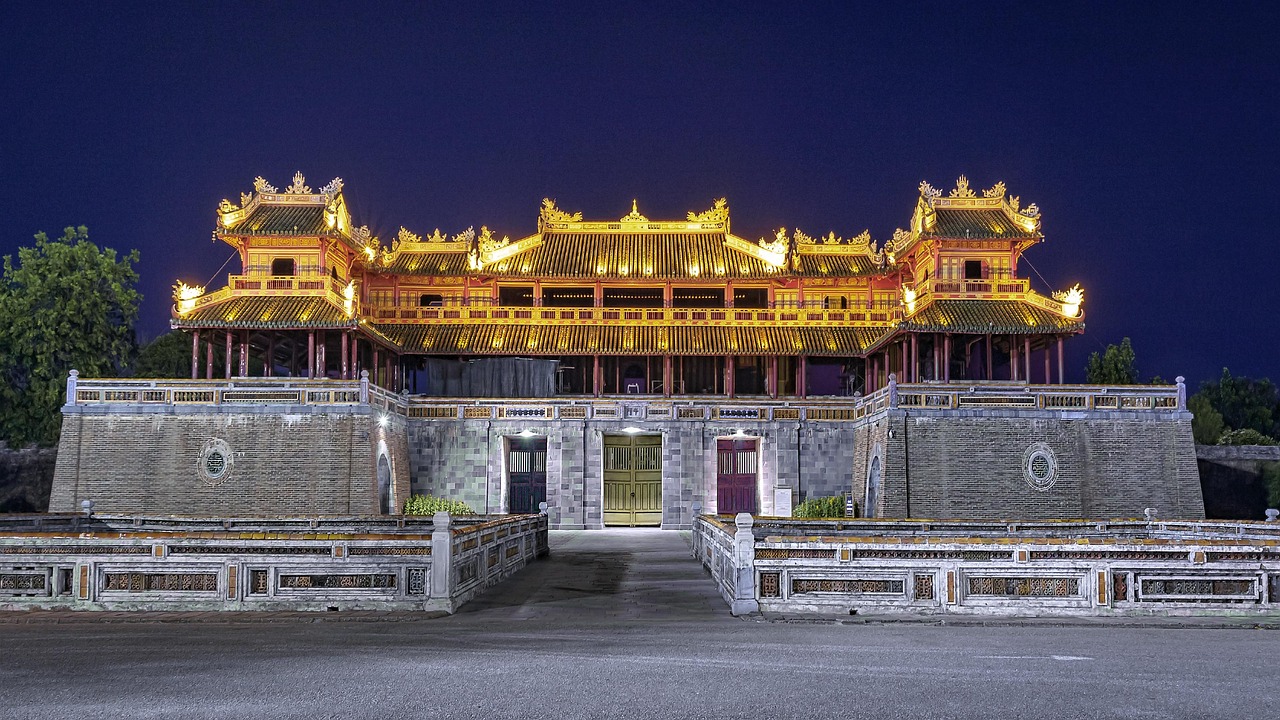
The journey, station by station
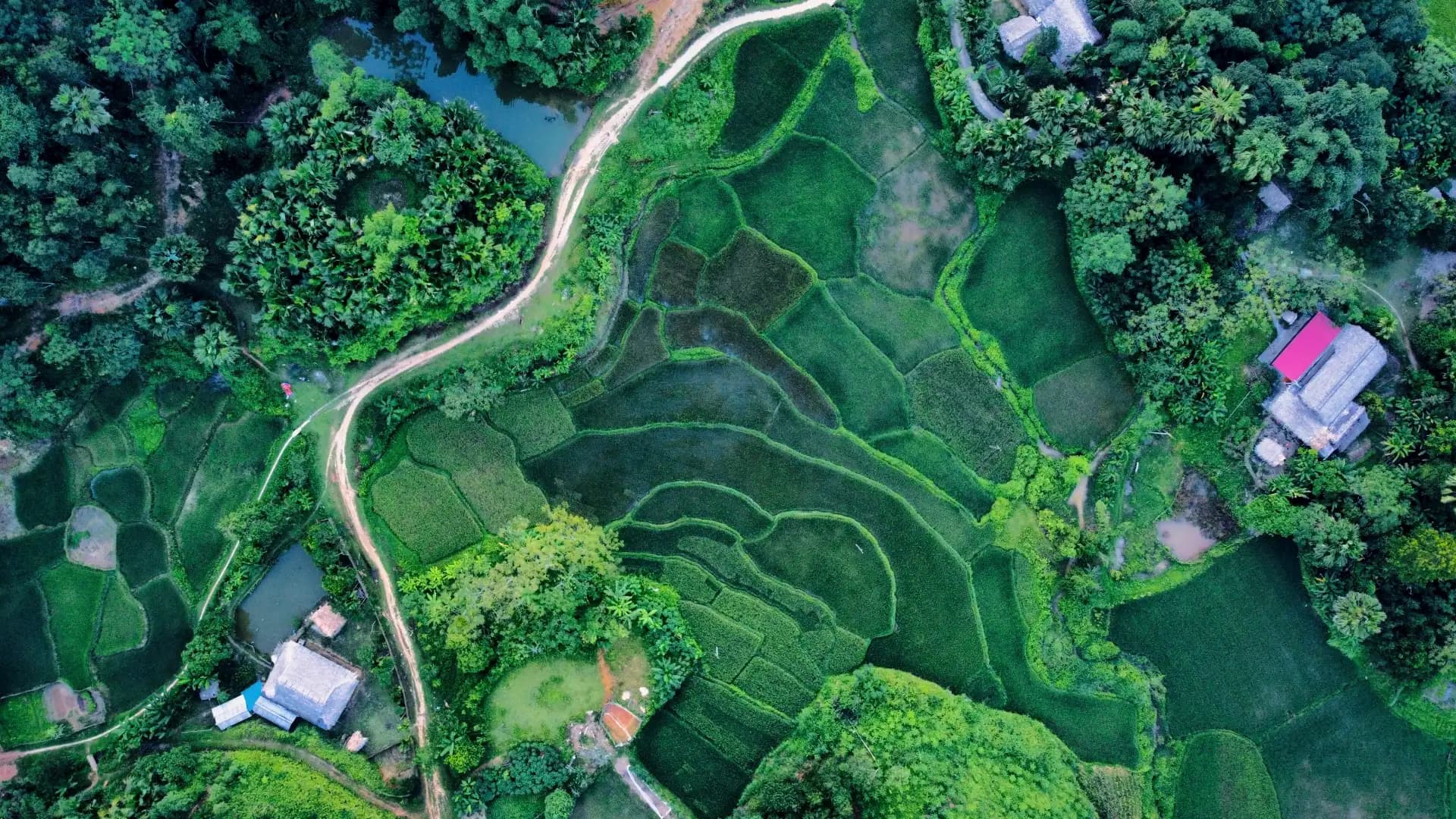
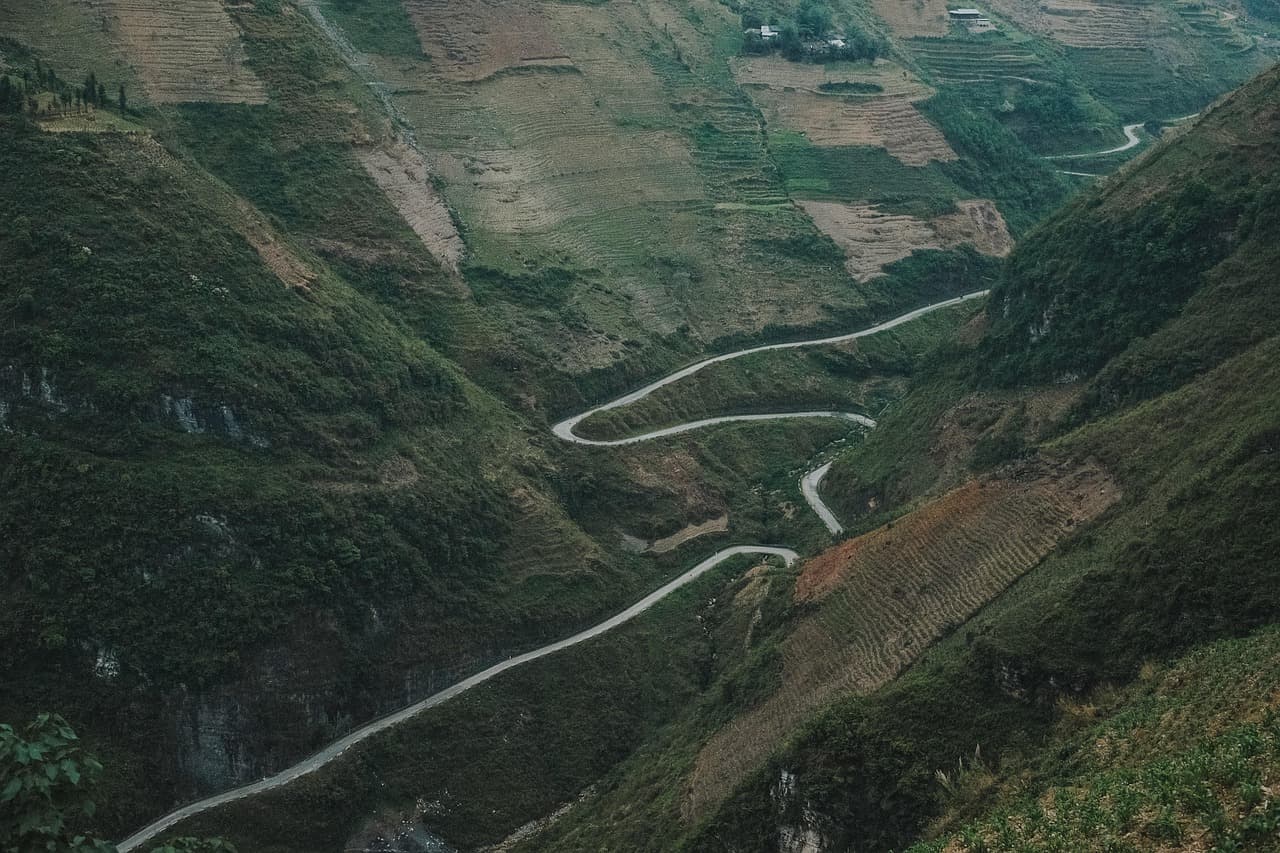
In the morning, the HQ2 leaves Huế at 7:15 and heads north. Through the window, Huế's atmosphere gives way to coastal plains, rice fields, rivers, villages, then the limestone mountains of Quảng Bình. In the afternoon, the HQ1 makes the return trip from Thọ Lộc. Each station has its own story.
- •Huế (departs 7:15): the starting point, with the Imperial City, the royal tombs and the Perfume River.
- •Đông Hà (9:15): the gateway to the Quảng Trị citadel, the Hiền Lương Bridge and the Vịnh Mốc tunnels, places marked by the memory of the war.
- •Mỹ Trạch (10:26): a quieter stop, among riverside villages and the Lệ Thủy area, birthplace of General Võ Nguyên Giáp.
- •Đồng Hới (11:28): the coastal city of Quảng Bình, with Nhật Lệ Beach and the Quảng Bình Quan gate.
- •Thọ Lộc (arrives 11:55): the station for Phong Nha-Kẻ Bàng National Park, about 20 km from the village.
On the way back, the HQ1 leaves Thọ Lộc at 13:15, reaches Đồng Hới at 13:56, Mỹ Trạch at 14:53, Đông Hà at 15:52 and arrives in Huế at 17:25. You do not have to do the whole trip in one go: tickets can also be bought between intermediate stations, so you can turn the journey into short stages, with local-product stands and photo corners at some stations.
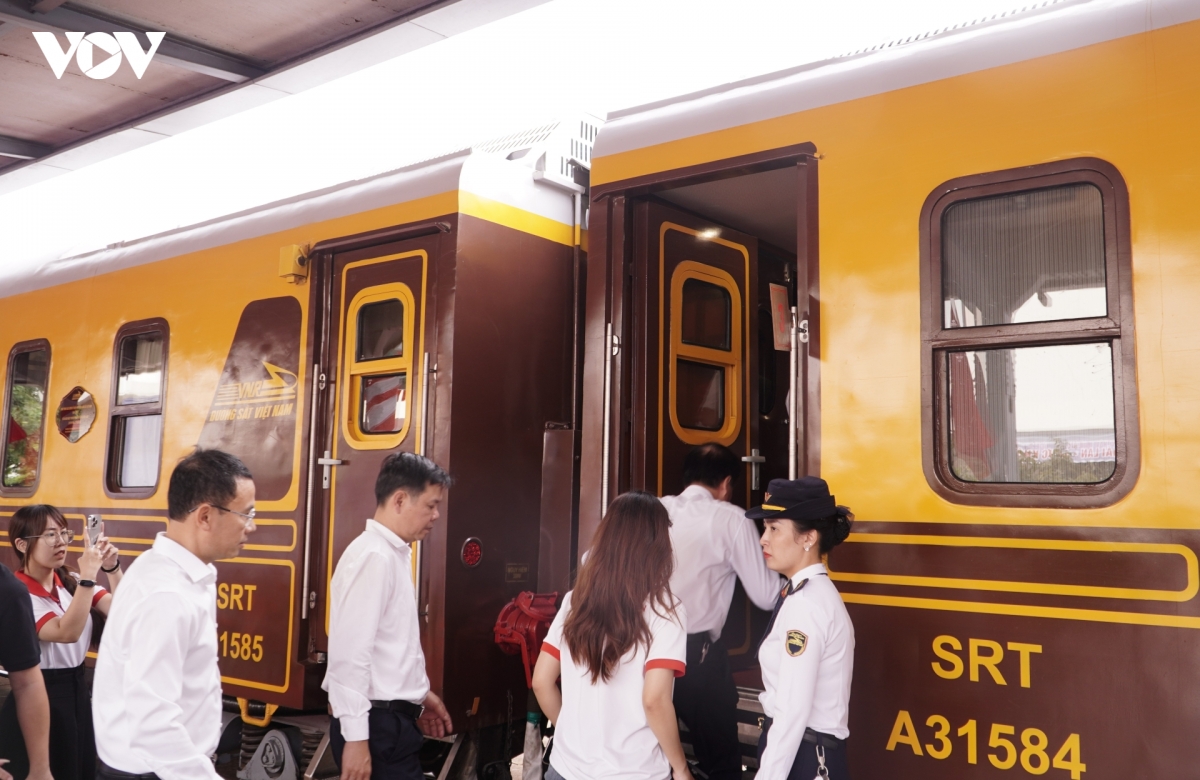
On board: the setting, the seats, the atmosphere
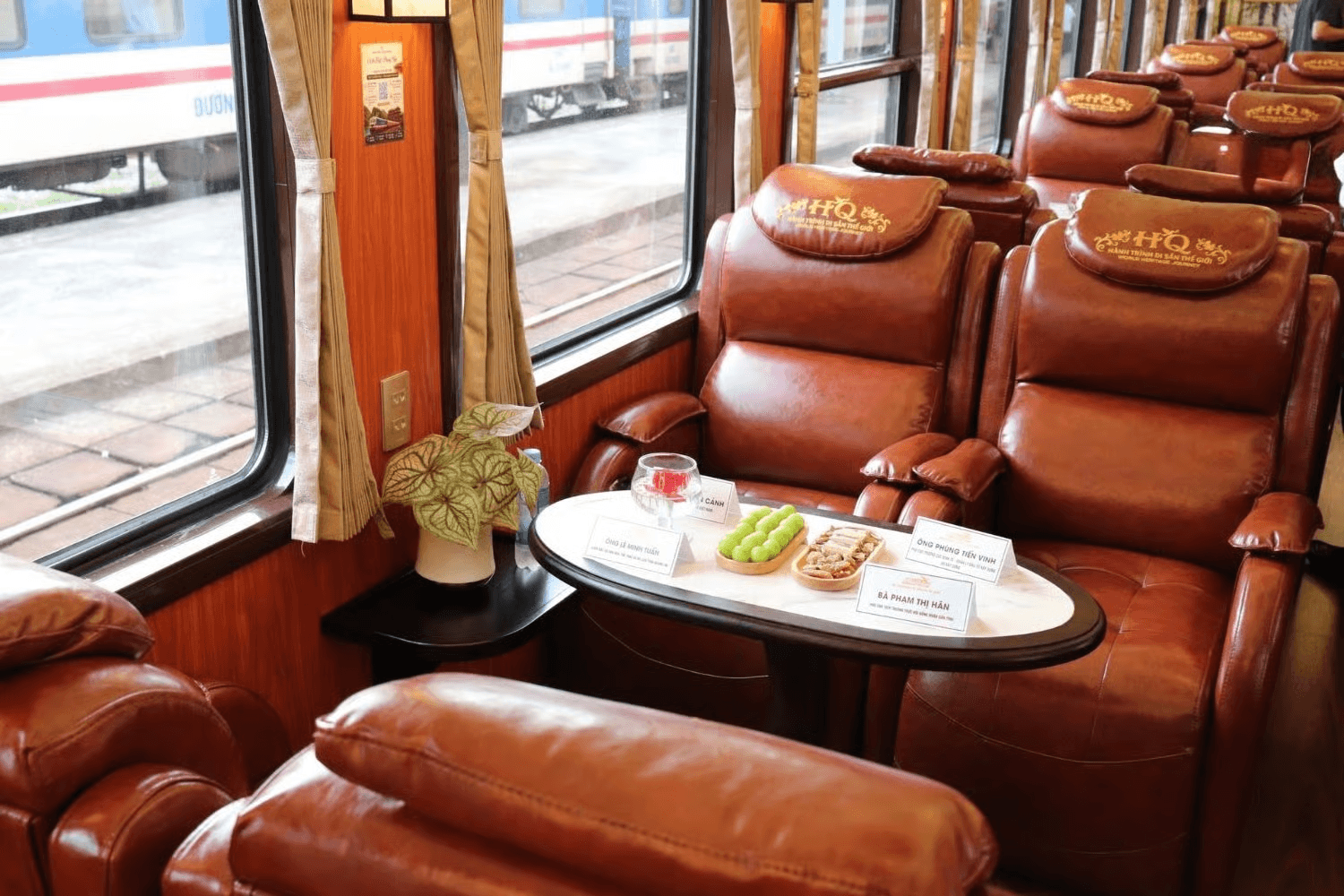
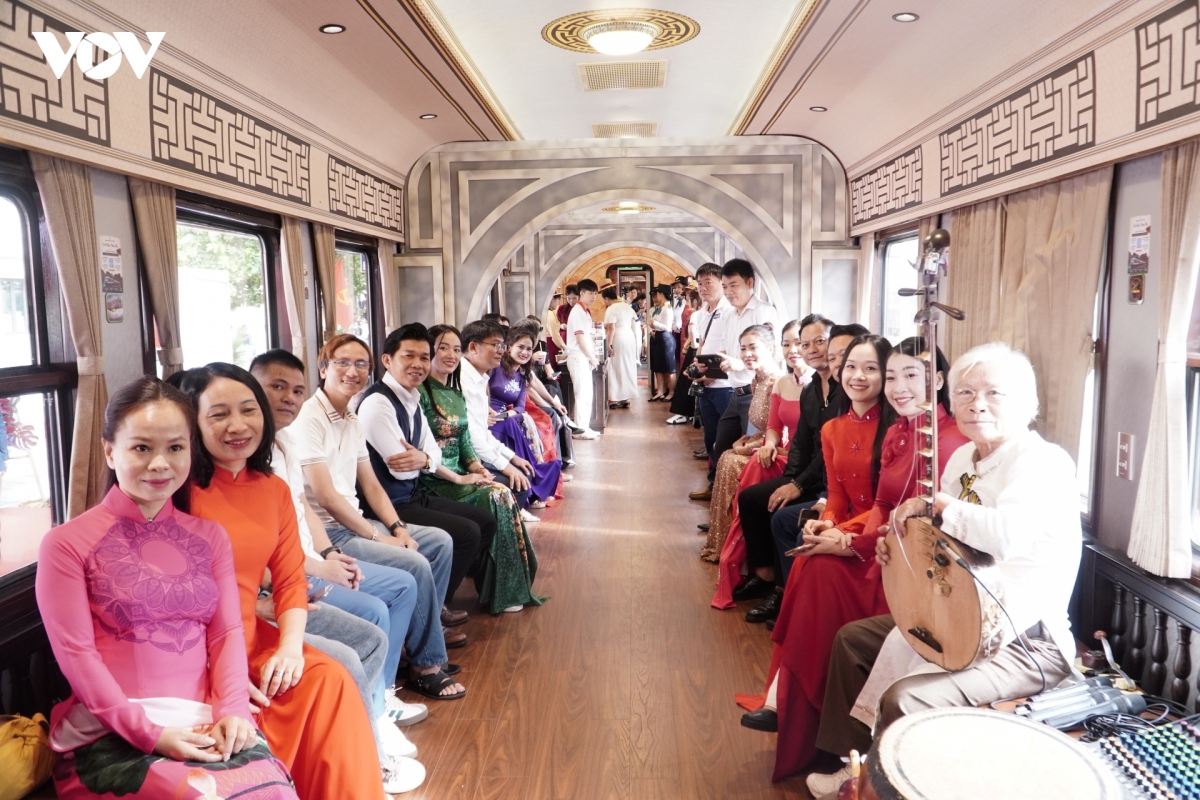
The train has eight carriages, and this is where it stands out from an ordinary ride. Five "premium" carriages line up swivel leather armchairs that you can turn towards the direction of travel or towards the window, with USB sockets and free Wi-Fi. A 24-seat VIP carriage focuses on privacy, with snacks and drinks offered at your seat. A "culture and arts" carriage hosts traditional musicians and an áo dài photo corner, and a service carriage brings together catering, certified OCOP regional products and an entertainment area, a first for Vietnam's railways. Digital audio guides accompany the journey.
The large windows, curtains, woodwork and patterns inspired by Huế's architecture give the carriage the feel of a small rolling lounge. You can get up, walk from one carriage to the next and change seats as you like, without the fatigue of the road: no hairpin bends, no horns. The price to pay is speed: a train is slower than a private car, and the schedule is fixed.
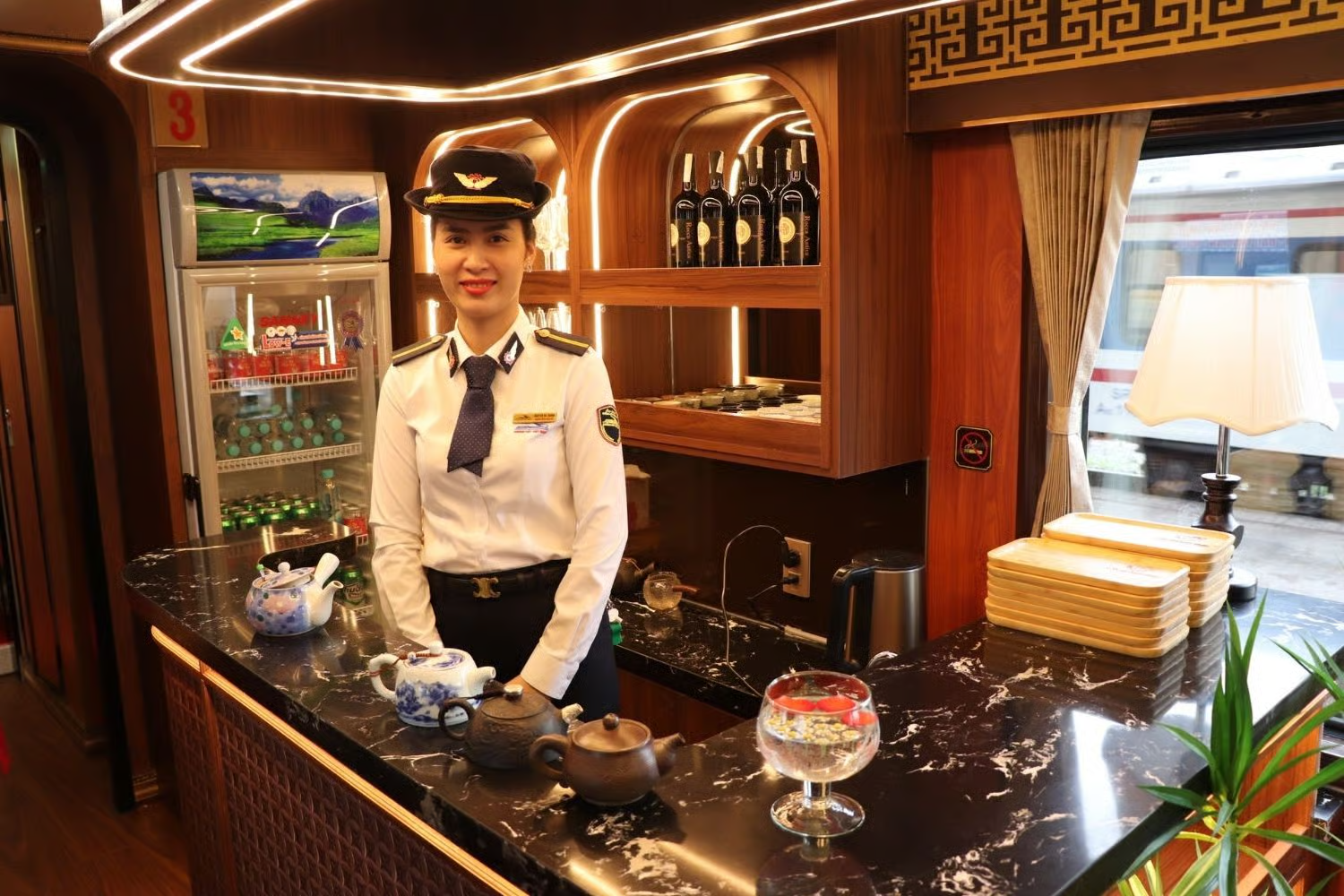
The tea bar and local flavors
In the service carriage, a black marble counter with carved woodwork serves tea, with staff in the railway's uniform. Alongside, shelves and a trolley offer specialties from Huế and the region: lotus-seed cookies, Huế bánh ép, teas and small treats to nibble on the way or bring home as souvenirs. It is a simple way to taste central Vietnam before you even arrive.
A cinema carriage for the long ride
Another carriage houses a small screening room with leather armchairs, a screen and a projector, along with massage chairs. You can also rent an áo dài there for souvenir photos. The railway does not detail the programme: see it as a pleasant break for children or for quiet moments rather than a reason to book.

Which seat to choose, and what it costs
The train offers two main atmospheres on the same route, but not the same level of comfort. From Huế to Thọ Lộc:
- •Swivel-seat carriage: 420,000 VND full fare, or 252,000 VND with the 40% discount currently offered. This is the best value for most travelers.
- •24-seat VIP carriage: about 760,000 VND full fare, or 456,000 VND with the discount. A step up for calm and service.
- •Shorter trips in a swivel seat, with the discount: Huế → Đông Hà around 176,000 VND, Huế → Đồng Hới around 244,000 VND.
The 40% discount runs until 31 December 2026. On top of that come an extra 10% off the return leg for a round trip, group codes ("2tang1" for 3–4 travelers, "4tang2" for 5–8) that amount to one or two free tickets, and 60% off at the ticket office for residents of Huế and Quảng Trị. Always rely on the final price shown at checkout.
To book, use official channels: dsvn.vn or the train's dedicated website. The company hotline answers on 1900 0109 and 1900 1520. In busy periods, book two to four weeks ahead: the best seats go first.
From Thọ Lộc station to Phong Nha
The rail network does not go as far as Phong Nha village. Between Thọ Lộc station and the center, allow about 20 km, or 20 to 30 minutes by road. The most reliable options: your hotel or homestay's shuttle (give them the train number and arrival time), a transfer included in your tour, or a taxi booked in advance. Taxis are rare at the station, and local shuttles are mentioned but not guaranteed.
"💬 Conseil terrain – VietNomads
Do not plan a same-day round trip from Huế: the HQ2 arrives at 11:55 and the HQ1 leaves at 13:15, a 1 h 20 connection, barely enough for lunch. Book a one-way ticket, sleep at least one night in Phong Nha, then go back by bus, private car or train the next day.
What to do in Phong Nha once you arrive
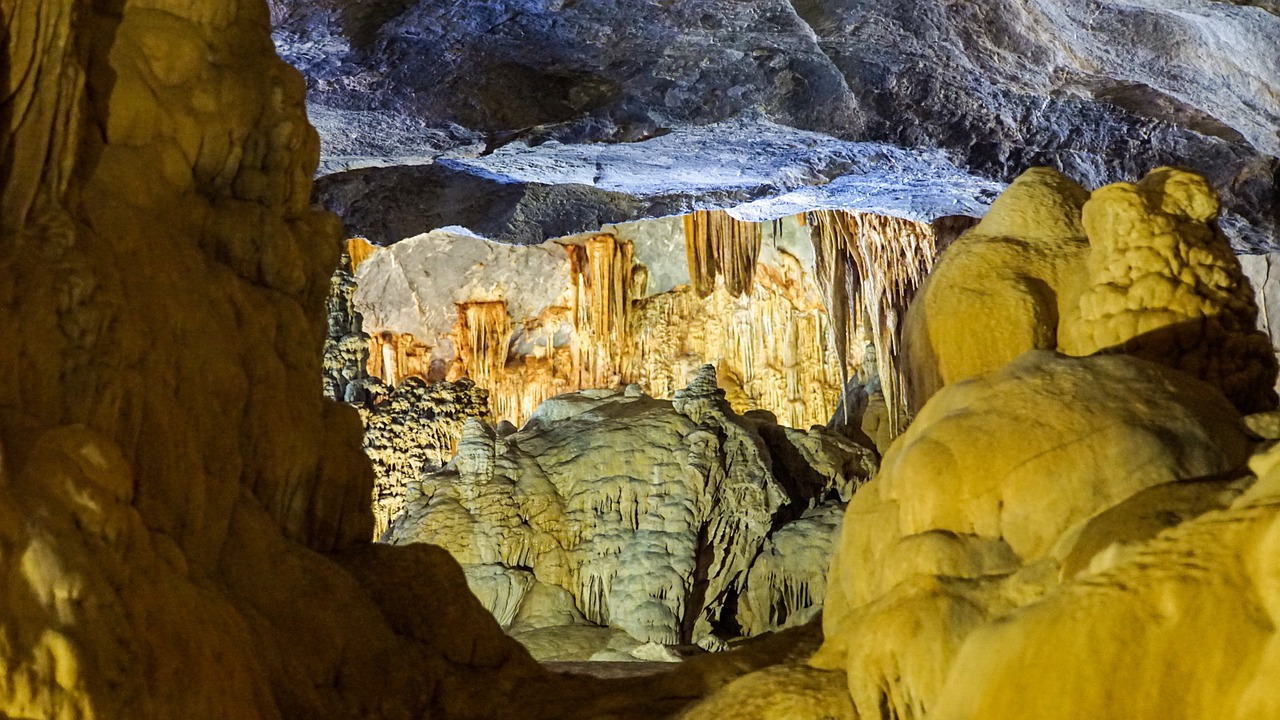
Arriving around noon, the day is not lost. Phong Nha-Kẻ Bàng National Park holds one of the largest cave networks in the world, among forest-covered karst cliffs. In the afternoon, a boat ride on the Son River to Phong Nha Cave is a good first taste. The next day, treat yourself to Paradise Cave (Thiên Đường) and its white formations, or the Chày River and the Dark Cave, explored by kayak or on foot with a guide. Sơn Đoòng Cave, for its part, is reserved for tightly supervised expeditions.
Boat tickets are bought on site, but for guided excursions it is better to book the day before.
When to travel, and pitfalls to avoid
From October to December it is the rainy season on the central coast, with a risk of typhoons and floods: trains can be delayed or suspended, and boat visits to the caves close when the river rises. The best window for Phong Nha is rather February to August. In the rainy season, keep a spare day and avoid non-refundable nights without checking the weather.
A few simple habits: buy your tickets on the official site rather than on third-party platforms, bring water and a snack, and reconfirm the timetable the day before.
In short: who it is for, and how to fit it into your trip
The Huế – Phong Nha train suits those who like to take their time and make the journey part of the trip. On a central Vietnam itinerary, it slots naturally between Huế and Phong Nha-Kẻ Bàng, before continuing to Hội An or Hanoi. If you are planning a trip to Vietnam and want help lining up timetables, transfers and accommodation, the VietNomads team can build the itinerary with you.