Why Quy Nhơn is the Vietnamese destination on the rise in 2026
Some cities have always been on the map, and others suddenly step out of the shadows. Quy Nhơn belongs firmly to the second group. In early 2026, Tripadvisor ranked this coastal city in central Vietnam 4th on its global list of "Trending Destinations" — the most in-demand places of the year, out of more than eight million locations listed on the platform. It's a rare distinction, reserved for less than 1% of all destinations tracked.
Tripadvisor's verdict has become something of a viral line: spend 80% of your trip doing nothing at all, and the other 20% exploring the region's Cham towers and eating seafood pulled straight from the sea. The capital of Bình Định province, just over an hour's flight from Ho Chi Minh City, Quy Nhơn offers some of Vietnam's most beautiful beaches — with one major advantage over Nha Trang or Đà Nẵng: they're still far from overrun with tourists.
It's no coincidence that VietNomads has been getting more and more requests for this destination. After years spent in the shadow of its better-known neighbours, Quy Nhơn combines exactly what many travellers are looking for today: spectacular scenery, a still-intact local identity, and a noticeably slower pace of life.
How to get to Quy Nhơn
Quy Nhơn is served by Phù Cát Airport (UIH), about a 40-minute shuttle or taxi ride from the city centre. Flight connections are straightforward: around 1h05 from Ho Chi Minh City and 1h30 from Hanoi, with several daily rotations operated by Vietnamese airlines.
There are no direct flights from Đà Nẵng, however. For travellers making their way up or down the coast from Hội An or Đà Nẵng, the train is the most enjoyable option: the coastal line links the two areas in around 6 to 7 hours, passing rice paddies and stretches of coastline that are worth the ride on their own. A private car with driver covers the same route in about half a day, with photo stops at Cù Mông Pass or in fishing villages along the way.
For a first visit, we generally recommend flying in one direction and taking the train back (or vice versa) if your itinerary already includes Đà Nẵng or Hội An — it avoids covering the same ground twice and turns a simple transfer into a leg of the trip in its own right.
Beaches and natural sites not to miss
Kỳ Co beach is responsible for a good part of Quy Nhơn's reputation on its own. Nicknamed the "Maldives of Vietnam," it owes its name to an unusually clear turquoise sea, framed by cliffs that form a kind of natural amphitheatre. The water is generally calm in the morning, before the wind picks up in the early afternoon — making mornings the best time for swimming and photos. It's reached by boat from Nhơn Lý village, or via a newer scooter road followed by a short boat ride.
A few kilometres north, Eo Gió (literally the "wind strait") offers a completely different sight: tall rocky cliffs frame a crescent-shaped cove, and a boardwalk trail runs along the coast with striking viewpoints over the ocean. Sunrise and sunset here are especially popular with photographers.
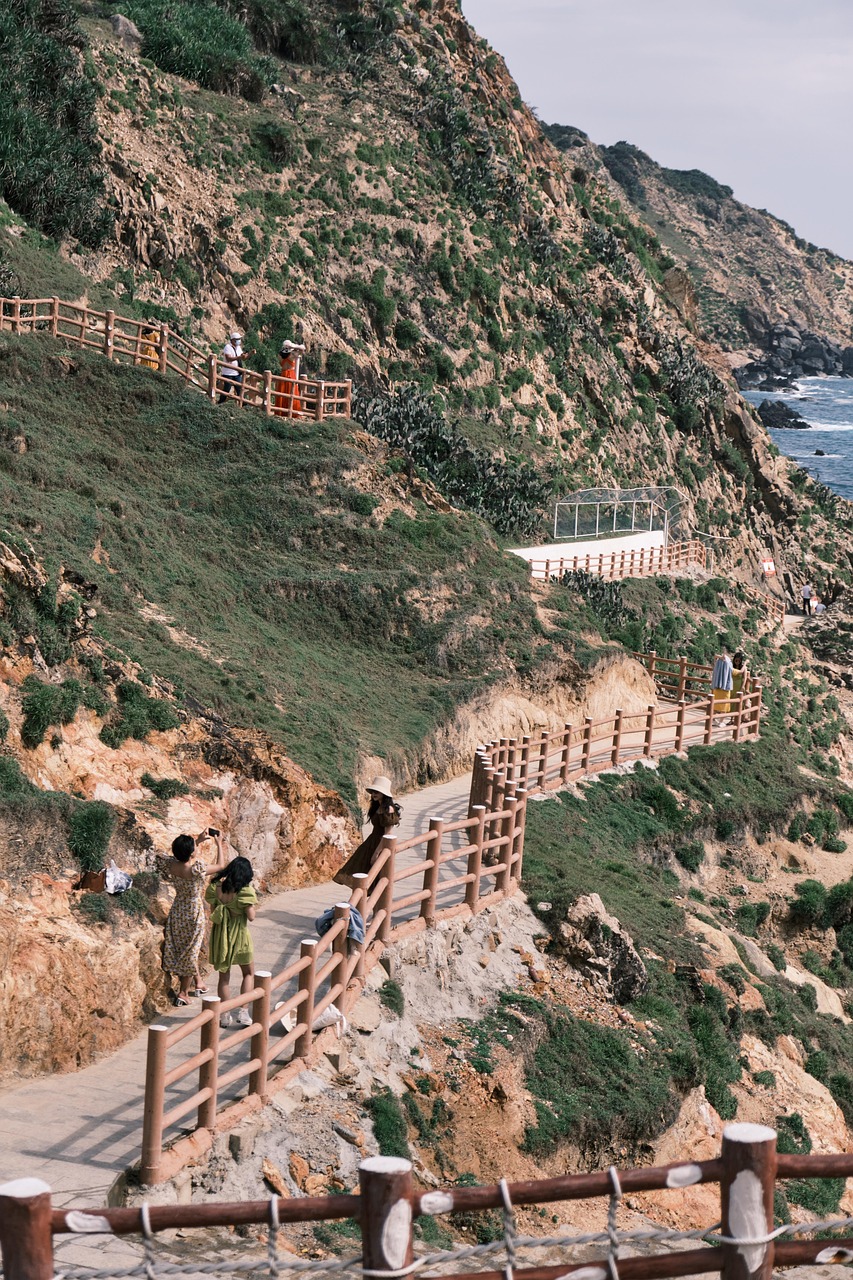
To extend the time on the water, Hòn Khô island, a short boat ride from Nhơn Lý, offers snorkelling that's accessible even to beginners, with shallow reefs and clear water for most of the year. Closer to the city centre, the Ghềnh Ráng - Tiên Sa area is also worth a visit: its beach of round, sea-polished pebbles is unique in the region, and the site is also home to the tomb of poet Hàn Mặc Tử, a major figure in 20th-century Vietnamese literature.
"💬 VietNomads field tip
Book your Kỳ Co excursion for early morning, ideally before 8am: the sea is calmer, the light is softer for photos, and you'll avoid the midday rush of tour boats. Bring some cash too — ATMs are scarce once you're outside central Quy Nhơn.
On the trail of the Chăm: history and culture in Bình Định
Long before it became a name on trending-destination lists, the Bình Định region was one of the heartlands of the Champa kingdom, a civilisation that dominated central Vietnam for nearly a thousand years. The most accessible trace of that legacy sits right in the middle of Quy Nhơn: the twin Thập Tháp towers (Tháp Đôi), two red-brick towers dating from around the late 12th century, remarkably well preserved and an easy half-hour visit from the city centre.
Other, more remote Cham sites round out the visit for history-minded travellers: the Bánh Ít towers, perched on a hilltop about twenty minutes from the centre, come with a lovely view over the surrounding countryside as a bonus. These sites remain lightly visited, meaning you can explore them without the crowds sometimes found at comparable spots elsewhere in Vietnam.

What to eat in Quy Nhơn
Bình Định's cuisine is worth the trip on its own. The signature dish is bánh xèo tôm nhảy, literally "dancing shrimp pancake" — a name that comes from the legendary freshness of the shrimp, caught so close by that some are still moving when they hit the pan. Smaller than the classic Vietnamese pancake, crispy and generously filled, it's eaten wrapped in rice paper with fresh herbs, dipped in a garlic-chilli sauce. Bánh Xèo Tôm Nhảy Ông Hùng, at 24 Diên Hồng Street, serves one of the most highly regarded versions in town.
Another local specialty, bún chả cá is a fish-cake noodle soup, the central Vietnamese take on a dish found in other forms elsewhere in the country. Bún Chả Cá Liên, on Nguyễn Huệ Street, serves a version particularly popular with locals. For seafood lovers, Xuân Diệu Street, which runs along the seafront, is lined with restaurants and stalls where you pick your meal straight from the tanks — crab, shrimp, and grilled fish among them.
When to go and how long to stay
The best time to visit Quy Nhơn generally runs from March to September, when the weather is warm, sunny, and the sea at its calmest — ideal conditions for swimming and snorkelling. August, in fact, sits right in this favourable window: unlike northern Vietnam, where August means rainy season and typhoon risk over the Gulf of Tonkin, Bình Định still enjoys largely stable weather at this time of year, before central Vietnam's real rainy season sets in later in the year.
For a first visit, three to four days is generally enough to enjoy the main beaches, a Kỳ Co and Eo Gió excursion, and a half-day of culture in town. Travellers combining Quy Nhơn with a wider central Vietnam itinerary (Đà Nẵng, Hội An, Huế) can easily slot it in at the start or end of the trip, thanks to the coastal train link.
Frequently asked questions about Quy Nhơn
Is Quy Nhơn suitable for a family trip? Yes: the beaches are generally quieter than in Nha Trang or Đà Nẵng, with less traffic and a more relaxed atmosphere, making it a comfortable destination to travel to with children.
Do you need to book the Kỳ Co excursion in advance? It's usually not essential outside Vietnamese holiday periods, but booking the day before through your accommodation or a local agency is simpler than negotiating on the spot early in the morning.
Is Quy Nhơn more expensive than Nha Trang or Đà Nẵng? No, if anything the opposite is currently true: accommodation and meals remain on average a little cheaper, even as new upscale resorts start appearing along the coast.
Can you combine Quy Nhơn with Hội An or Đà Nẵng? Absolutely, and it's actually one of the most enjoyable ways to see it: allow 6 to 7 hours by train or half a day by road between the two areas.
In summary
Quy Nhơn is arriving at a turning point: still largely unspoiled, yet increasingly recognised internationally, with an easier way in than ever — a direct flight from Ho Chi Minh City or Hanoi. Between the turquoise waters of Kỳ Co, the cliffs of Eo Gió, Cham ruins right in the city centre, and a local cuisine that already lives up to its reputation, the city ticks every box for a destination that, in a few years, may not be quite so quiet anymore. That's precisely what makes it, today, one of the most interesting stops to add to a Vietnam itinerary.