The Mekong Delta is the Vietnam of rivers: a maze of brown waterways, orchards, rice paddies and stilt-house villages, only a few hours from Ho Chi Minh City. Many travellers squeeze it into a rushed day trip. That's a shame: with three days you can glide under water palms, watch a floating market at dawn and eat the way people really eat in the South.
Here is the 3-day itinerary we recommend from Ho Chi Minh City: Bến Tre, Cần Thơ, then Vĩnh Long and Sa Đéc, with an optional extension to Châu Đốc.
Why visit the Mekong Delta in November
November generally marks the end of the rainy season in the South and the start of the dry season, which runs roughly from November to April. In practice that means fewer downpours, clearer light and heat that stays bearable, especially on the water in the morning. Water levels are also still high, which keeps the delta looking lush and lively.
Another plus: late autumn is calm before the holiday rush. As Tết approaches (early February 2027), the region's flower villages get busy and the atmosphere changes noticeably. November lets you see the delta at its everyday pace.
Before you go: getting organised
The delta is easy to explore independently, but a few points are worth planning ahead.
Getting there. Cần Thơ, the delta's main city, is about 170 km from Ho Chi Minh City. Allow three to four hours by road depending on traffic and roadworks, whether you travel by bus, minibus or with a private driver. Several bus companies connect the two cities every day; schedules and fares change, so check before you travel.
Private driver or local transport? For this itinerary, which links rural stops that are poorly served by public transport, a driver for days 1 and 3 makes life much easier. Buses work well for the main leg to Cần Thơ, but you will lose time between stops.
What to pack. A hat, sunscreen, mosquito repellent, light quick-drying clothes and a small rain jacket. Bring shoes that are easy to slip off: you will often remove them to step into boats or enter a home.
Where to sleep. We suggest one night in Cần Thơ, the ideal base for the morning floating market. Hotels there suit every budget, many near the Ninh Kiều waterfront.
Day 1: Ho Chi Minh City, Bến Tre and life on the canals
Leave Ho Chi Minh City early for Bến Tre, about 85 km away. The province is nicknamed the land of coconuts, and you will soon see why: coconut trees and water palms line nearly every canal.
The most enjoyable experience is to leave the main road and glide along narrow canals covered by water palms, in a small rowing boat steered by a local. The silence, the cool under the leaves and the occasional passing boat are worth the detour alone. Choose an operator that keeps groups small, and avoid the midday rush.
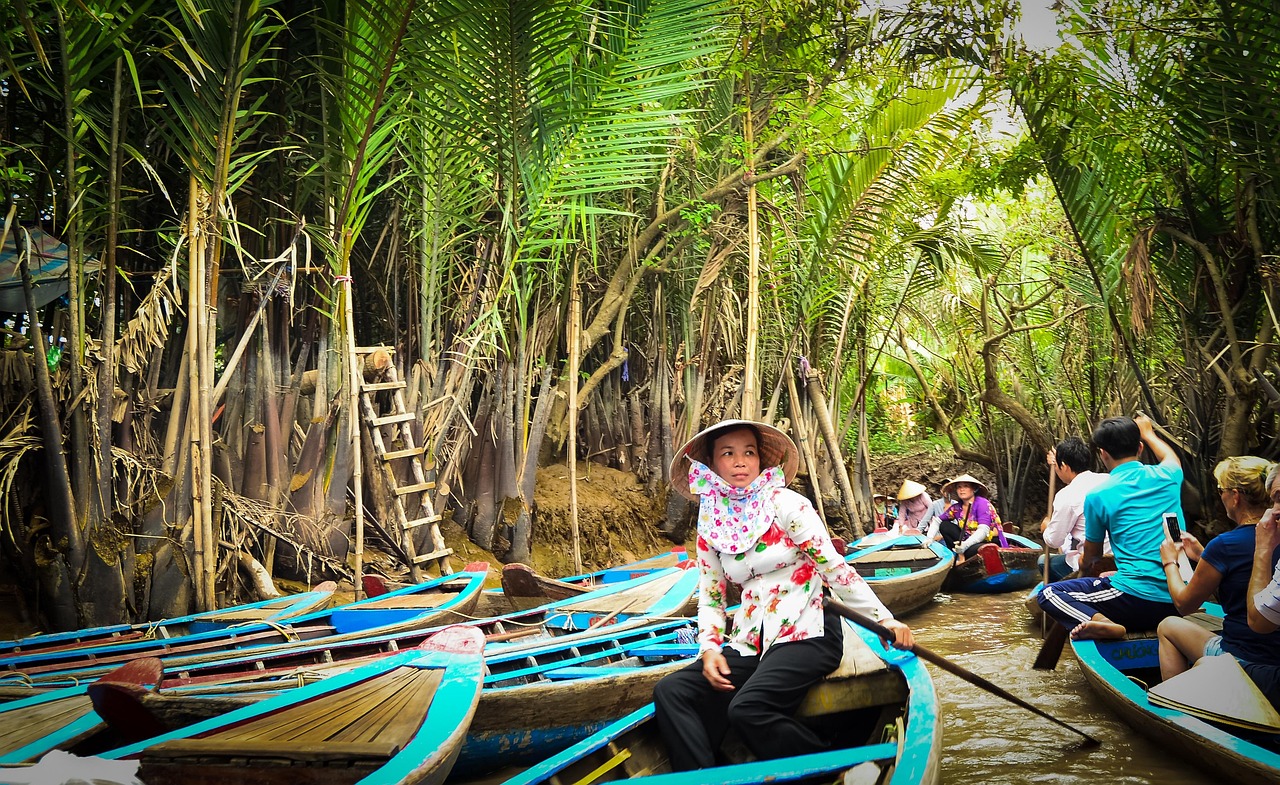
On the way, stop at a small workshop to see how coconut candy (kẹo dừa), a local speciality, is made. Tastings are free, buying is optional, and it is a pleasant way to support small family businesses. Have lunch in a garden house: grilled fish, fresh spring rolls, sour soup and seasonal fruit.
Late in the afternoon, head to Cần Thơ for the night. A stroll along the Ninh Kiều waterfront, as the Hậu River darkens and the first street stalls open, makes a lovely first evening.
Day 2: Cần Thơ and the Cái Răng floating market
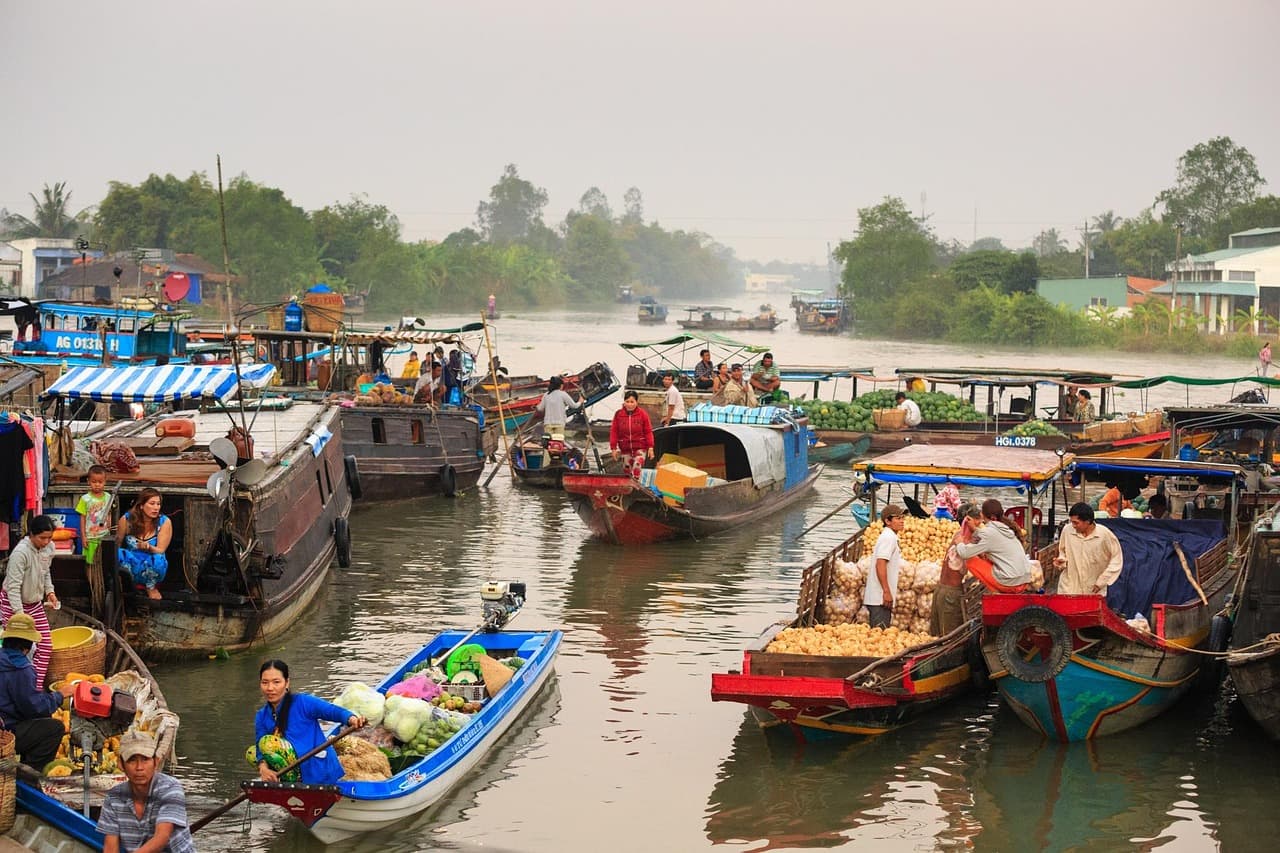
This is the highlight of the trip. The Cái Răng floating market sits about ten kilometres from central Cần Thơ and is liveliest early in the morning: aim to be in a boat around 5:30 to 6:00 a.m., before vessels start to disperse in late morning. Activity varies by season, and the market has shrunk somewhat over the years.
Traders sell from large boats. A pole planted at the front, the famous cây bẹo, shows what is for sale: a hanging pineapple means pineapples, a sweet potato means sweet potatoes. You can buy fruit straight from a boat, or have a coffee served on the water by a small craft weaving between the bigger boats.
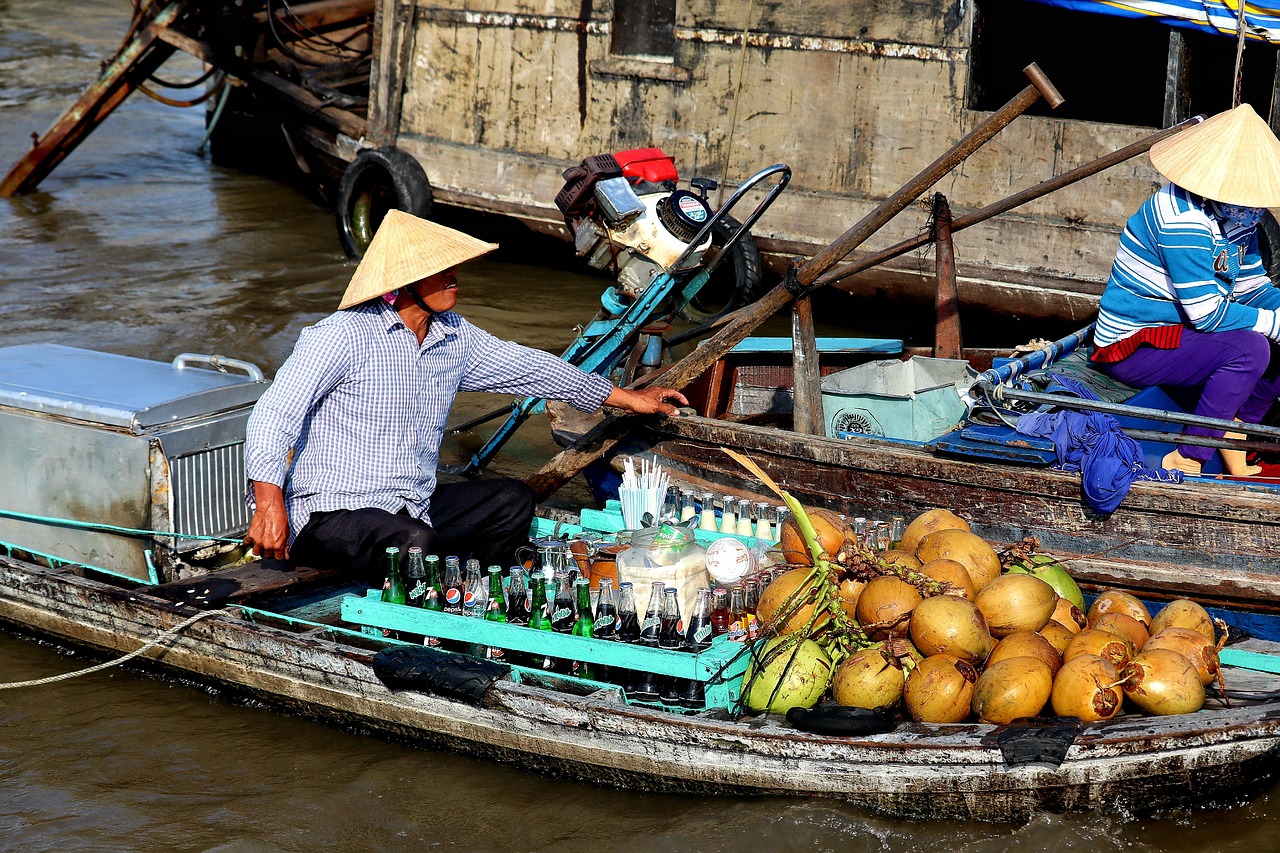
"💬 VietNomads field tip
Book your boat the day before through your hotel or a trusted operator, and agree the price and duration before boarding. Go very early: the later you arrive, the less is happening. Carry small bills in cash, which is what vendors expect.
After the market, continue to a small rice-noodle workshop, where you can see the batter spread, steamed and left to dry in the sun. The visit is short, often free, and very telling. The smaller Phong Điền floating market is a good alternative if you want to avoid the busier tourist boats.
For lunch, try the delta's specialities: lẩu mắm (the fermented-fish hotpot, a Southern classic), grilled snakehead fish and crispy bánh xèo. The afternoon suits a rest, then a last stroll along the quays at dusk.
Day 3: Vĩnh Long, Sa Đéc and back to Ho Chi Minh City
Leave Cần Thơ in the morning for Vĩnh Long, then Sa Đéc. The latter is known for its flower nurseries, which supply much of the country around Tết. Even outside peak season the walk between the gardens is lovely, and colours are more intense as the festival approaches.
Sa Đéc also has a literary history: novelist Marguerite Duras spent part of her childhood in the area, and the house of Huỳnh Thủy Lê, associated with the Chinese lover in her novel The Lover, can be visited. This residence blending Chinese and French influences takes about half an hour to see.
Head back to Ho Chi Minh City in the early afternoon. Leave a comfortable margin if you have a flight or train that evening: traffic into the city can be heavy, especially late in the day.
Option: extend to Châu Đốc and Trà Sư forest
If you have one or two more days, continue to Châu Đốc, near the Cambodian border, about three hours by road from Cần Thơ. The town has a quieter feel, strong Khmer and Cham influences, and floating villages on the river.
The Trà Sư cajuput forest is the main attraction. You travel by boat between the trees over water covered in a green carpet of duckweed, especially after the flood season. The look depends on the water level, so ask locally before booking.
Budget and mistakes to avoid
The delta is an inexpensive region. Most of the budget goes to accommodation, an optional driver and boat trips. Prices vary widely by season and comfort level, so we prefer not to quote fixed figures: always compare two or three offers.
The common mistakes are simple. Leaving too late and missing the floating market. Trying to do everything in two days and spending more time in the vehicle than on the water. Joining a huge group tour that stops at five shops. And forgetting that schedules and fares change: always confirm information before you go.
The Mekong Delta is not Vietnam's most spectacular destination, but it is one of its most human. Three days are enough to grasp the essentials, provided you slow down. If you are planning a wider trip, the VietNomads team can help fit this itinerary into a full route from South to North.