Ok Om Bok: when the Khmer people of the Mekong give thanks to the Moon
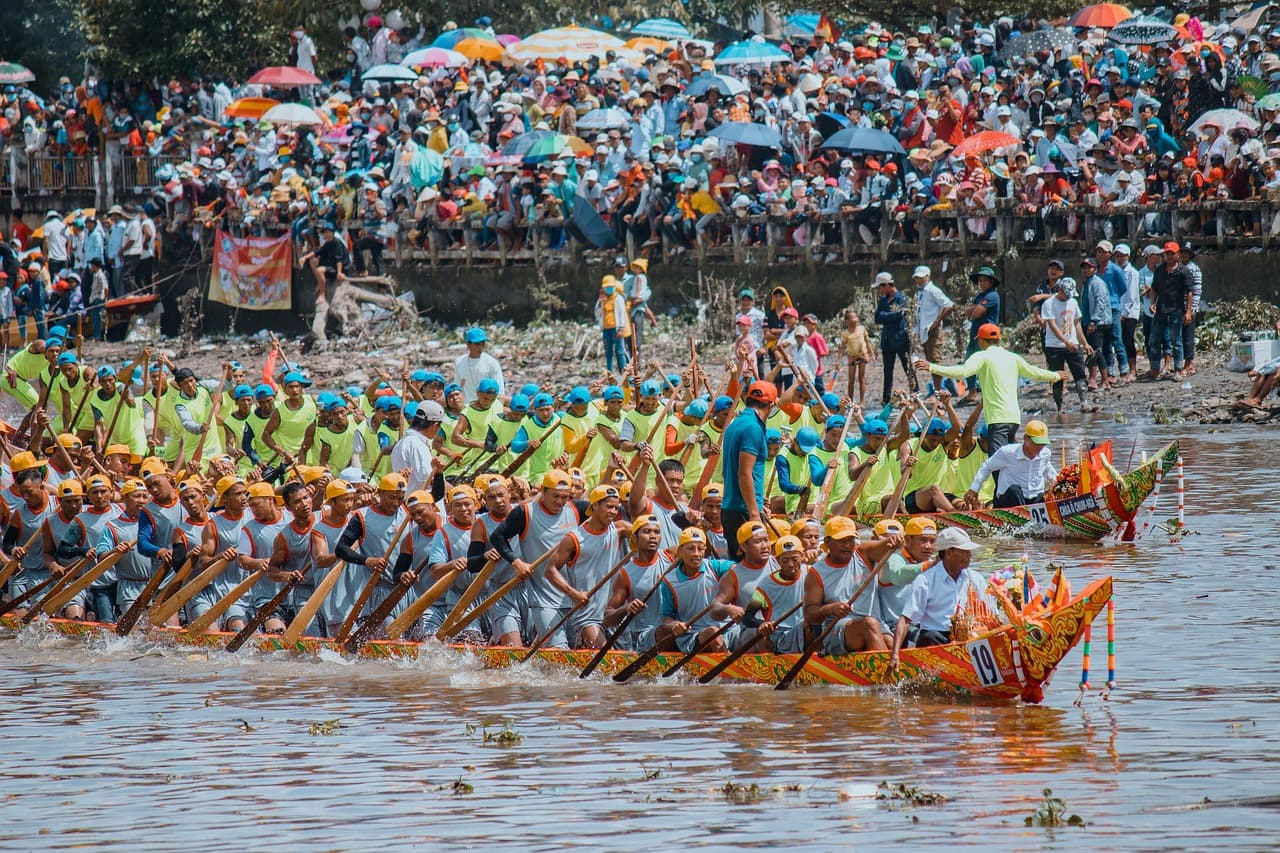
Every year, on the full moon of the tenth lunar month, southern Vietnam celebrates one of its most spectacular festivals, and one of the least known to travelers: Ok Om Bok, the great festival of the Khmer people of the Mekong Delta. For a few days, the city of Sóc Trăng fills with music, offerings, floating lanterns and, above all, dozens of long, slender canoes called ghe ngo, racing on the Maspero River in front of tens of thousands of spectators.
In 2026, the festivities run from November 22 to 24, with the ghe ngo races on November 23 and 24. If your trip to Vietnam falls in late November, it is a rare chance to discover a side of the country that is hard to imagine from Hanoi or Hội An: a living Khmer culture, Theravada Buddhist, with its flamboyant pagoda roofs and centuries-old farming traditions.
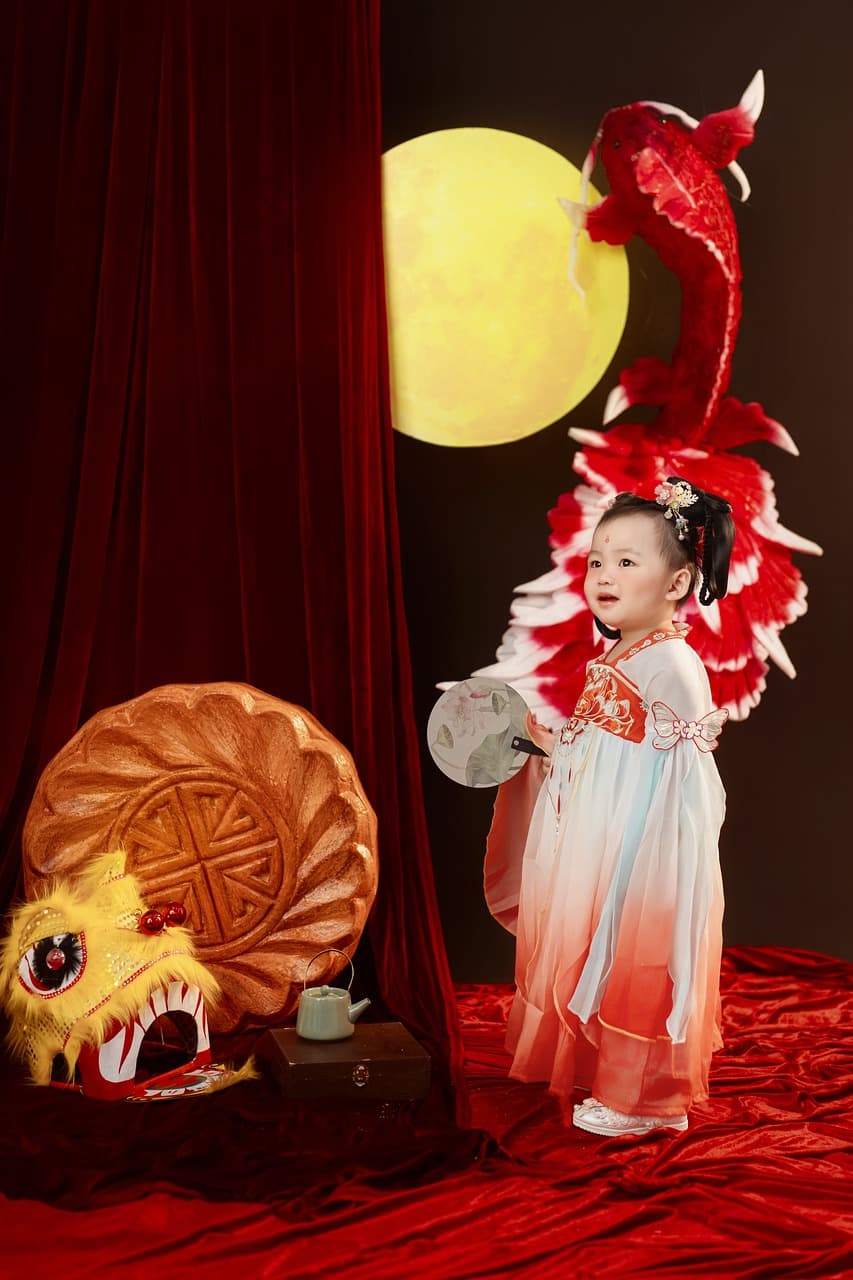
The festival's name sums up its central ritual. In Khmer, ok means "to feed" and ambok refers to glutinous rice that is toasted and then pounded flat (cốm dẹp in Vietnamese). At the end of the rainy season, once the harvest is in, families thank the Moon, seen as the deity who watches over the crops and governs the waters. They present her with the fruits of the land, then the elders place a handful of ambok in the children's mouths and ask them to make a wish. It is a festival of gratitude as much as a prayer for the season ahead.
The Khmer of the Mekong Delta, a culture apart in Vietnam
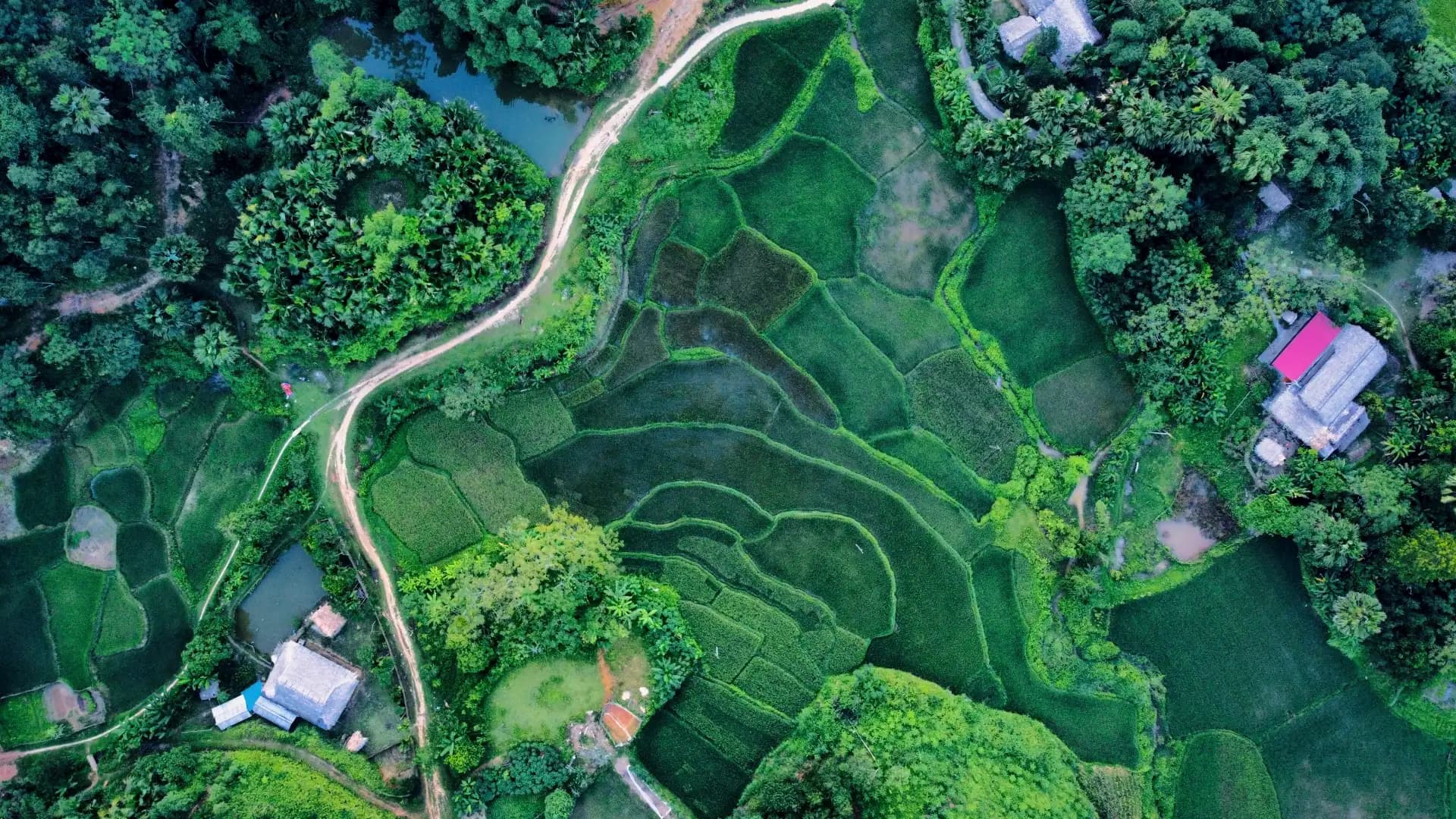
It is often forgotten, but Vietnam is home to around 1.3 million Khmer people, the Khmer Krom, who settled in the Mekong Delta long before the Vietnamese arrived in the region. They are especially numerous in the former province of Sóc Trăng (merged into Cần Thơ city under the July 2025 administrative reform), as well as around Trà Vinh and in the western delta.
Their social life revolves around the pagoda, the wat. Far more than a place of worship, it serves as a school, a community hall, a keeper of traditions and a boathouse for the racing canoes. Traditionally, many young men spend a period there as novice monks before starting a family. The year's great festivals set the rhythm: Chôl Chnăm Thmây, the Khmer New Year, in April; Sene Dolta, the festival of the ancestors, in September or October; and then Ok Om Bok in November, which closes the farming cycle.
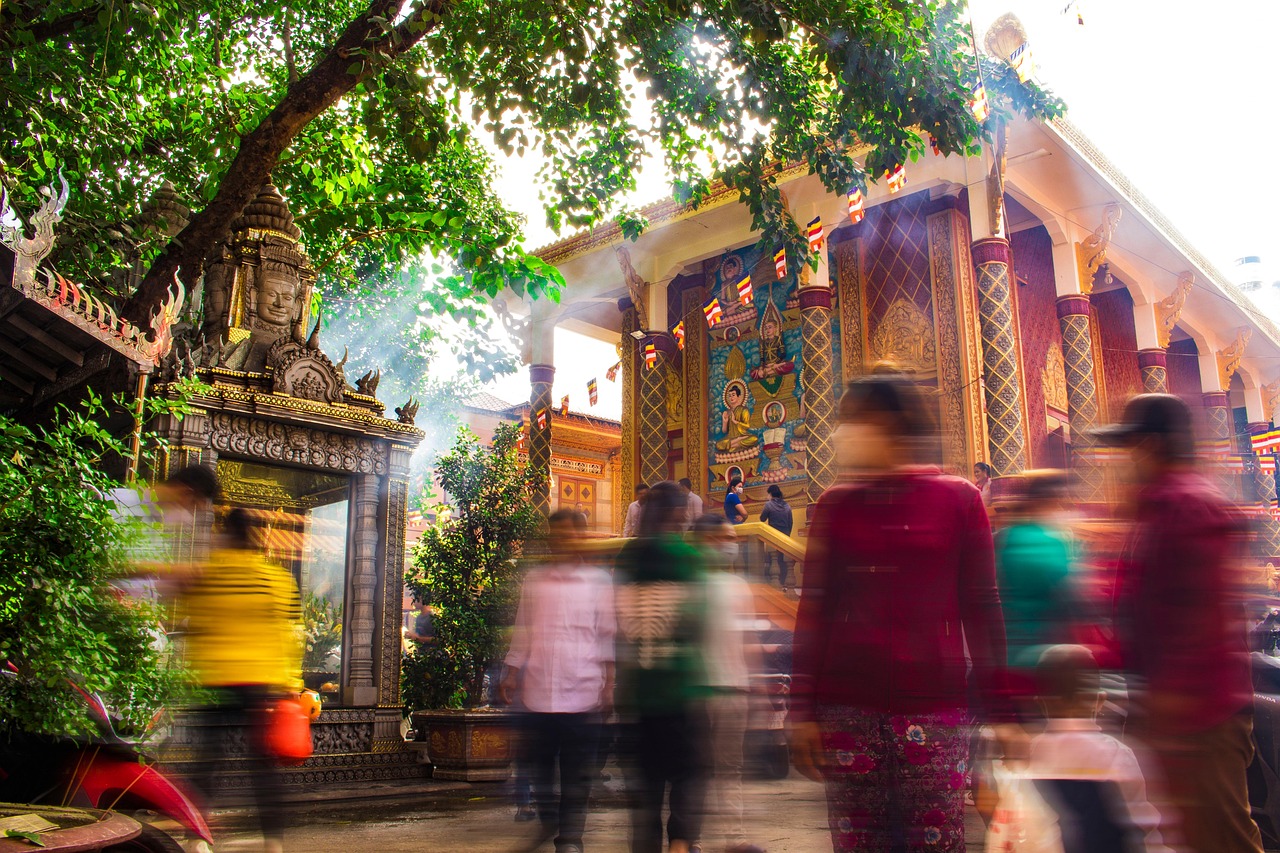
For travelers, it is a complete change of scene just a few hours from Ho Chi Minh City: you hear Khmer spoken in the markets, pagoda inscriptions are written in an elegantly curved script, and even the food changes, with dishes you will not find anywhere else in the country.
Ghe ngo: dragon canoes carved from a single trunk
The most eagerly awaited moment of Ok Om Bok is the ghe ngo racing. These canoes are usually 25 to 30 meters long and are traditionally carved from a single tree trunk. They carry up to sixty or so rowers, seated in pairs, who paddle to the rhythm set by a helmsman and a pacesetter in the middle of the boat, often armed with a whistle or a gong.
Each boat belongs to a pagoda and carries its colors. The raised prow evokes the naga, the mythical serpent that protects the waters, or a sacred bird; the hull is painted with bright geometric and floral patterns. For the rest of the year, the ghe ngo are kept under shelter within the pagoda grounds. Launching them, a few weeks before the competition, is marked by a ceremony, and the crews then train every evening on the village canals.
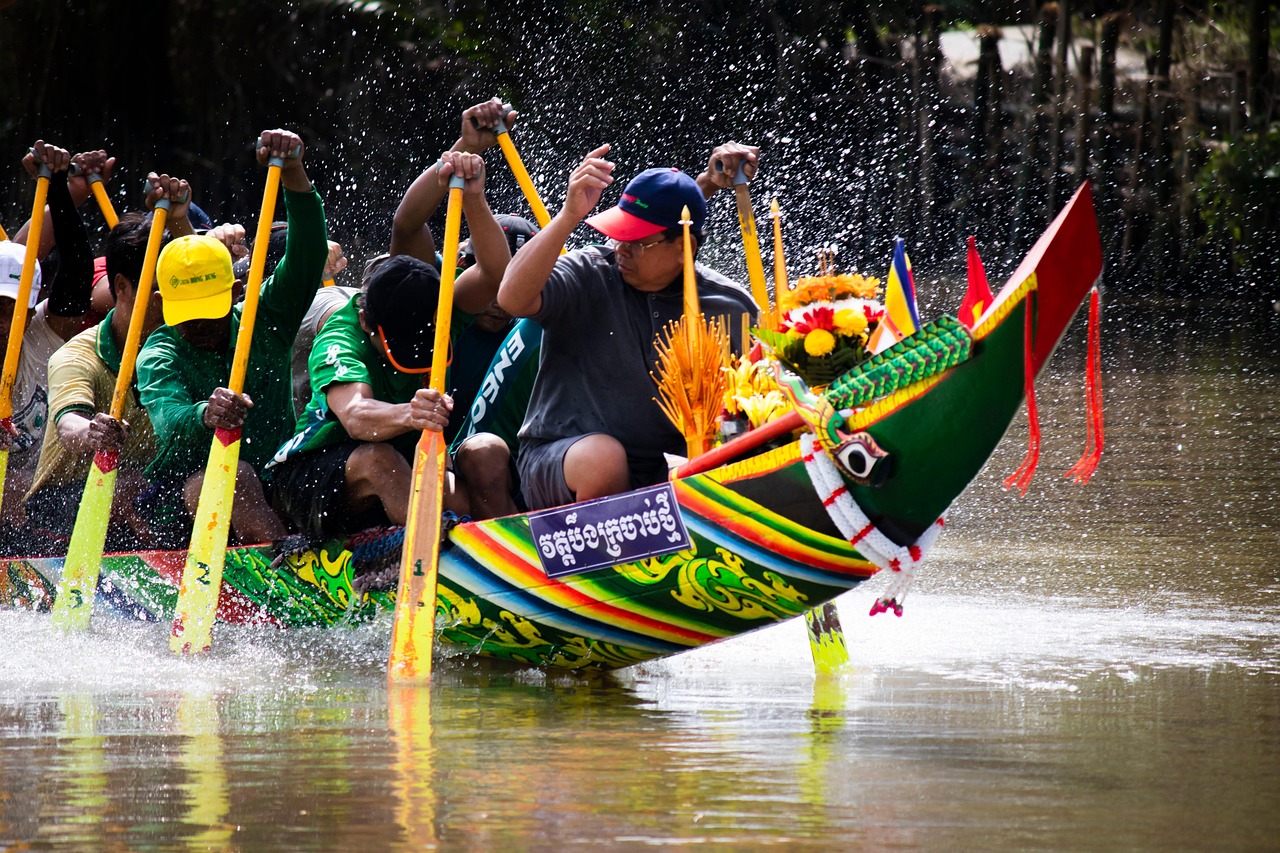
Beyond the sport, the race has a spiritual meaning: it symbolizes the waters receding to the sea at the end of the rainy season and is meant to bring prosperity to the village. The ghe ngo boat racing festival of the Sóc Trăng Khmer is listed as National Intangible Cultural Heritage of Vietnam. On the Maspero River, right in the city center, the riverbanks turn into giant grandstands, each pagoda's supporters sing and clap, and every heat finish sets off an impressive roar.
2026 program in Sóc Trăng: dates and highlights
Here are the main events announced by Cần Thơ city for the 2026 edition of the Ok Om Bok – Ghe Ngo Boat Racing Festival:
- •November 14 to 24: fair of OCOP products and regional specialties (around 200 to 300 stalls), in Urban Area 5A, Phú Lợi ward.
- •November 19 to 24: food court of some thirty stalls and a tourism promotion area.
- •November 20, 7 pm: traditional costume show of the Mekong Delta's ethnic groups at 30 April Park (Công viên 30/4), Phú Lợi ward.
- •November 22, 8 pm: festival opening night at 30 April Park.
- •November 23 and 24: ghe ngo tournament, with more than 60 men's and women's teams, in front of the race grandstand in Sóc Trăng ward.
The program also includes the Moon worship ceremony and a floating lantern show on the river. With the full moon falling on November 24, 2026, the atmosphere is at its most intense around that date. Detailed schedules are usually confirmed a few weeks before the event, so check them one last time just before you set off.
The night of Moon worship and lanterns on the water
While the races take place in broad daylight, the spiritual heart of Ok Om Bok beats at night. In pagoda courtyards and in front of homes, people set up an altar facing east, where the Moon will rise. On it they place ambok, coconuts, bananas, sweet potatoes, taro, cakes and seasonal fruit, surrounded by candles and incense sticks. When the Moon appears, families pray in silence, then comes the moment when the elders feed the children flattened rice and hear their whispered wishes.
Later in the evening, the water lanterns, called lôi protip, take over. These are large illuminated structures, often shaped like boats or pagodas, set adrift on the river to thank the spirit of the waters and ward off misfortune. In the villages, smaller lanterns are also released on the canals. In the warm delta night, it is a gentle spectacle after the excitement of the races.
Visiting the Khmer pagodas around Sóc Trăng
Ok Om Bok is the perfect excuse to discover the region's Khmer pagodas, among the most beautiful in southern Vietnam. There are nearly a hundred in the former province of Sóc Trăng. Recognizable by their tiered roofs of orange tiles, their golden spires and their carved mythological guardians, they often stand in gardens planted with sugar palms.
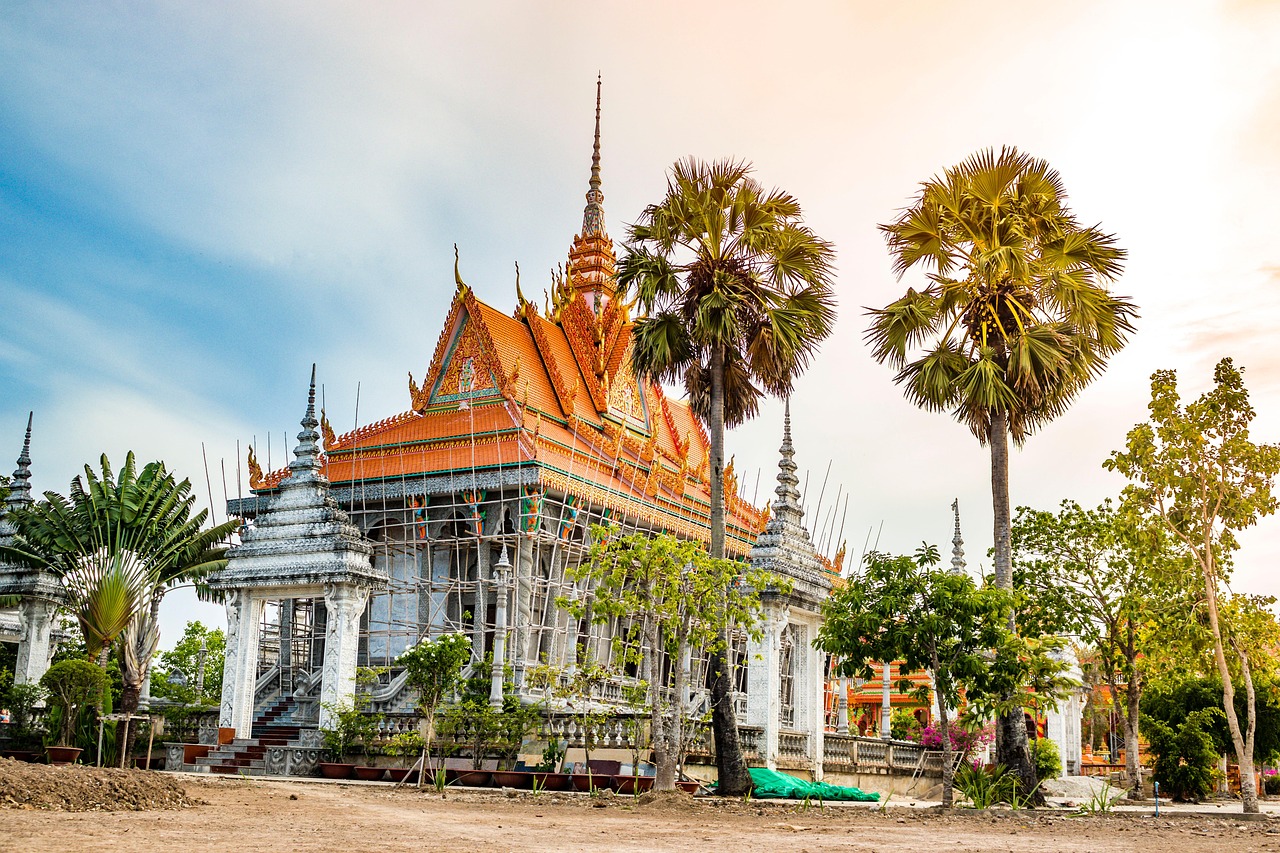
Three of them are easy to visit in half a day from the city center:
- •Dơi Pagoda (Mahatup), famous for the thousands of fruit bats hanging in the trees of its grounds. Come in the late afternoon to watch them take flight at dusk.
- •Chén Kiểu Pagoda (Salôn), whose façades are entirely decorated with fragments of porcelain bowls and plates, hence its nickname, the "bowl pagoda".
- •Kh'Leng Pagoda, one of the oldest in the region, in the heart of the city, appreciated for its architecture and its calm.
During the festival, the pagodas are buzzing: it is the time to see rowing crews getting ready, ghe ngo being decorated before the race and families busy preparing offerings.
Etiquette: how to take part respectfully
Ok Om Bok is first and foremost a religious and community festival, and visitors are welcomed with great kindness. A few simple rules will help you enjoy it as a thoughtful guest:
- •In pagodas, cover your shoulders and knees, take off your shoes before entering the sanctuary and never point your feet towards a Buddha statue.
- •Theravada monks must not be touched by women: if you want to hand them something, place it in front of them or pass it through a man.
- •Always ask before photographing a monk, a family at prayer or a child during the ambok ritual.
- •During the Moon worship, stay in the background and avoid using a flash. If you are invited to taste ambok, accept: it is a gesture of welcome.
- •On the riverbanks, crowds are dense and the atmosphere electric. Keep your belongings close and agree on a meeting point in advance if you are in a group.
Planning your stay: getting there, accommodation and weather
Getting there. Sóc Trăng is about 60 kilometers from central Cần Thơ, roughly a 1 to 1.5-hour drive, and about 230 kilometers from Ho Chi Minh City, which takes 4 to 5 hours by bus or private car. Cần Thơ International Airport, with flights to Hanoi among others, is the most convenient gateway if you are coming from the north.
Accommodation. Hotel options in Sóc Trăng are limited and fill up quickly during the festival. Book several weeks in advance, or stay in Cần Thơ, which is much better equipped, and do a day trip on race day.
Weather. In late November, the Mekong Delta is coming out of the rainy season. Days are generally sunny, with temperatures of 25 to 31 °C and the odd shower. Bring a hat, sunscreen and water: you will spend a long time in full sun on the riverbanks.
"💬 VietNomads field tip
For the races, get to the banks of the Maspero River by 7 am: the best spots near the finish line are taken very early, and the access roads into central Sóc Trăng quickly become gridlocked. Rather than trying to follow every heat, pick half a day of racing, then retreat to the shade of a pagoda during the hottest hours. The evening before, take a stroll around the pagodas: crews rehearse and prepare their boats there, and the welcome is often warmer than in the middle of the crowd.
What to eat. Make the most of your visit to try the Khmer cuisine of the delta: bún nước lèn, a rice noodle soup with fish flavored with prahok and galangal; bánh cống, a small fried cake with mung beans and shrimp; ambok, of course; and bánh pía, the flaky durian and bean pastry that made Sóc Trăng famous.
Extending your trip in the Mekong Delta
Ok Om Bok fits easily into a four- or five-day itinerary in the delta. For example: arrive in Cần Thơ, spend a morning at Cái Răng floating market, then head to Sóc Trăng for two days of festival and pagodas. Continue to Trà Vinh, another major center of Khmer culture, with its lotus ponds and century-old pagodas, before heading back up to Bến Tre and its coconut groves, or flying off to Phú Quốc, which is in full dry season by late November.
Would you like to plan your trip to Vietnam around the 2026 Ok Om Bok festival? The VietNomads team can build a tailor-made Mekong Delta itinerary with you, with accommodation booked in time and a local guide to explain the Khmer rituals.